
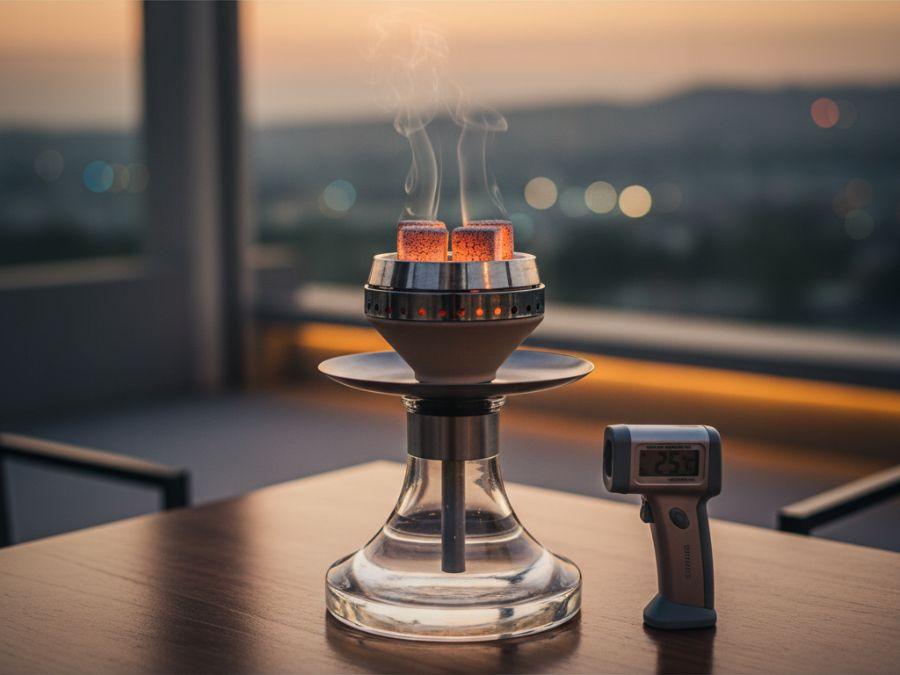
Professional hookah lounges maintain consistent heat output across 90-120 minute sessions through strategic charcoal placement, rotation timing, and premium coconut shell briquettes that deliver stable temperature curves. Proper heat management reduces harsh smoke, extends tobacco flavor, and improves customer satisfaction.
Understanding the Hookah Heat Curve
The heat curve represents temperature changes during a hookah session. Premium coconut charcoal briquettes maintain 650-700°C starting temperatures that gradually stabilize at 550-600°C for sustained performance. This controlled decline prevents the rapid temperature spikes that cause harsh smoke and burnt tobacco flavor.
Ideal Heat Curve Characteristics:
- Initial Heat: 650-700°C for first 15 minutes (tobacco heating phase)
- Sustained Performance: 550-600°C for 60-90 minutes (optimal smoking window)
- Gradual Decline: Controlled temperature reduction in final 15-20 minutes
- Minimal Fluctuation: Temperature variance under 50°C during peak performance
Low-quality charcoal produces inconsistent heat curves with rapid spikes followed by premature cooling. This forces frequent coal replacement and disrupts the smoking experience. Professional lounges recognize that consistent heat curves directly impact customer retention and operational efficiency.
Why Coconut Charcoal Delivers Superior Heat Stability
Coconut shell charcoal briquettes maintain stable heat curves through higher fixed carbon content and lower ash production compared to wood-based alternatives.
Fixed Carbon Content Impact
Coconut charcoal contains 80-85% fixed carbon versus 60-70% in hardwood charcoal. Higher fixed carbon percentages translate to sustained combustion rates with minimal temperature fluctuation. The dense carbon structure burns slowly and evenly, preventing the rapid heat loss that occurs with lower-density fuels.
Ash Content and Heat Performance
Premium coconut briquettes produce less than 3% ash content during complete combustion. Lower ash production maintains better airflow around coals throughout the session. Wood charcoal generates 5-8% ash that accumulates on coal surfaces, creating insulation barriers that reduce heat transfer efficiency.
Heat Performance Comparison (90-Minute Session):
| Charcoal Type | Fixed Carbon | Ash Content | Temperature Stability | Coal Replacements |
| Premium Coconut Shell | 80-85% | <3% | ±30°C variance | 0-1 replacement |
| Standard Wood Charcoal | 60-70% | 5-8% | ±80°C variance | 2-3 replacements |
| Quick-Light Charcoal | 40-50% | 10-15% | ±120°C variance | 3-4 replacements |
One Dubai shisha lounge owner reported reducing coal replacements from 3 times per session to once every 90 minutes after switching to premium coconut briquettes. This efficiency improvement reduced labor interruptions and improved customer experience scores.
Strategic Coal Placement for Optimal Heat Distribution
Heat distribution across the tobacco bowl determines flavor quality and session duration. Professional lounges implement systematic placement strategies that maximize heat efficiency.
Three-Coal Standard Configuration
The three-coal triangle placement provides balanced heat distribution for standard 15-20 gram tobacco bowls. Position coals evenly spaced around the bowl perimeter, approximately 5-8mm from the edge. This configuration creates consistent heat zones without direct center contact that causes premature burning.
Triangle Placement Benefits:
- Even Heat Distribution: Three equidistant points create uniform temperature zones
- Airflow Optimization: Center space maintains oxygen circulation for sustained combustion
- Flexible Heat Control: Individual coal removal enables quick temperature adjustment
- Extended Tobacco Life: Perimeter heating preserves center tobacco for longer sessions
Four-Coal Configuration for Extended Sessions
High-volume lounges serving 120+ minute sessions add a fourth coal after 45-60 minutes. Position the fourth coal offset from existing triangle points to maintain balanced distribution. This rotation strategy extends session length without oversaturating the bowl with excessive heat during initial phases.
Heat Zone Management
Create distinct heat zones by adjusting coal distance from bowl edges:
- High Heat Zone (5mm from edge): For tobacco activation in first 20 minutes
- Medium Heat Zone (8-10mm from edge): For sustained performance during 30-90 minute window
- Low Heat Zone (12-15mm from edge): For gentle heat in final session phase
Professional hookah preparers adjust coal positions every 15-20 minutes to maintain optimal heat curves. This active management prevents the common mistake of static coal placement that creates uneven heating patterns.
Heat Curve Optimization Through Session Phases
Successful long sessions require distinct heat management strategies across three phases.
Phase 1: Initial Heating (0-15 Minutes)
The tobacco activation phase requires maximum heat output to generate initial smoke production and flavor release.
Initial Setup Protocol:
- Position three fully-lit coals in triangle configuration at 5-6mm from bowl edge
- Allow 3-5 minute heat absorption period before first inhalation
- Monitor for white smoke indicating proper tobacco heating
- Avoid premature inhaling that draws harsh, unheated air through tobacco
Premium coconut briquettes reach 650-700°C temperatures during this phase. The high initial heat activates tobacco essential oils and begins the flavor development cycle. Insufficient heating creates weak smoke and poor flavor extraction.
Phase 2: Sustained Performance (15-90 Minutes)
The primary smoking window requires stable heat maintenance with minimal intervention.
Sustained Phase Management:
- Rotate coals 90 degrees every 20-25 minutes to ensure even burning
- Remove accumulated ash using metal tongs (never blow on coals)
- Gradually increase coal distance from bowl edge as session progresses (5mm → 8mm → 10mm)
- Monitor smoke quality for signs of overheating (harsh taste) or underheating (weak smoke)
One professional lounge manager in Amsterdam tracks coal rotation timing with kitchen timers. This systematic approach maintains consistent heat curves across 200+ daily sessions while reducing coal waste from premature replacements.
Phase 3: Session Conclusion (90-120 Minutes)
The final phase requires gentle heat to extract remaining tobacco flavor without burning.
Final Phase Protocol:
- Reduce to two coals positioned at 12-15mm from bowl edge
- Allow natural temperature decline rather than adding fresh coals
- Conclude session when smoke production decreases to 30-40% of peak output
- Never force extended sessions with excessive heat that burns remaining tobacco
Premium coconut briquettes maintain 400-500°C temperatures in the final phase. This controlled decline provides satisfying smoke production without the harsh, burnt characteristics that occur when forcing heat maintenance beyond tobacco capacity.
Identifying and Correcting Heat Curve Problems
Professional lounges recognize heat curve issues before they impact customer experience.
Rapid Temperature Decline (Premature Cooling)
Symptoms: Weak smoke production after 30-40 minutes, frequent coal replacement requests, customer complaints about short sessions.
Causes:
- Low-quality charcoal with insufficient fixed carbon content
- Oversized tobacco bowls requiring excessive coal quantity
- Improper coal lighting (grey coating absent, indicating incomplete ignition)
- Excessive ash buildup restricting airflow
Solutions:
- Source coconut briquettes with verified 80-85% fixed carbon content
- Match bowl size to standard three-coal heating capacity
- Ensure complete coal ignition before hookah assembly
- Remove ash every 20 minutes using proper tools
Excessive Heat (Rapid Burning)
Symptoms: Harsh, bitter smoke, headache complaints, tobacco color change from brown to black within 30 minutes, short session duration.
Causes:
- Coals positioned too close to bowl center or tobacco surface
- Excessive coal quantity for bowl size
- Oversized tobacco portions creating heat retention
- Insufficient airflow due to packed tobacco
Solutions:
- Maintain 5-8mm minimum distance between coal edges and bowl rim
- Remove one coal if smoke tastes harsh after initial 10-minute period
- Use standard 15-20 gram tobacco portions
- Ensure fluffy tobacco packing with visible air gaps
Inconsistent Smoke Production
Symptoms: Alternating periods of thick and thin smoke, varying smoke flavor throughout session, unpredictable coal performance.
Causes:
- Mixed charcoal types or qualities within same session
- Irregular coal rotation schedule
- Environmental factors (outdoor wind, air conditioning drafts)
- Tobacco moisture content variations
Solutions:
- Use single charcoal batch per session for consistency
- Implement 20-minute rotation timers for systematic management
- Shield coals from wind using heat management devices
- Store tobacco in humidity-controlled environment (60-65% RH)
Advanced Heat Management Tools and Techniques
Professional lounges implement specialized equipment to enhance heat curve control.
Heat Management Devices (HMDs)
Metal heat management devices create regulated heat chambers that protect tobacco from direct coal contact while maintaining consistent temperatures. Premium aluminum or stainless steel HMDs feature:
- Ventilation Control: Adjustable vents regulate airflow and heat intensity
- Heat Distribution: Metal surface disperses heat evenly across tobacco surface
- Ash Containment: Device walls prevent ash from falling onto tobacco
- Temperature Buffering: Metal mass moderates temperature fluctuations
HMD usage extends coconut charcoal efficiency by 15-20% through improved heat transfer. One Mediterranean lounge chain reduced charcoal consumption from 12 coals per day per table to 9-10 coals after implementing HMDs across all setups.
Wind Covers and Heat Retention
Glass or metal wind covers shield coals from environmental cooling while enhancing heat retention. These accessories prove particularly valuable for:
- Outdoor Seating Areas: Protection from wind that accelerates coal combustion
- Air-Conditioned Lounges: Minimizing temperature loss from ventilation systems
- High-Altitude Locations: Compensating for reduced oxygen availability
- Cold Weather Operation: Maintaining heat output in sub-15°C conditions
Wind covers increase effective session length by 20-30 minutes without additional coal requirements.
Foil Optimization Techniques
Aluminum foil selection and perforation patterns significantly impact heat transfer efficiency.
Professional Foil Application:
- Use heavy-duty food-grade aluminum foil (0.02mm+ thickness)
- Apply double-layer foil for enhanced heat resistance and puncture protection
- Create 15-20 small holes in circular pattern using thin needle (better than large holes)
- Maintain tight foil tension without sagging into tobacco surface
- Leave 2-3mm gap between foil and tobacco for heat distribution chamber
Small, numerous holes provide superior airflow compared to few large holes. The increased hole count distributes draw resistance evenly while preventing localized hot spots.
Operational Implementation for Lounge Managers
Systematic heat management processes ensure consistent quality across staff and sessions.
Staff Training Protocol
Implement structured training that covers:
- Charcoal Quality Recognition: Visual identification of properly-lit coals (uniform grey coating, orange glow)
- Placement Measurement: Using tools to maintain consistent coal positioning
- Rotation Timing: Clock-based rotation schedules rather than judgment-based decisions
- Problem Recognition: Early identification of overheating or underheating symptoms
- Customer Communication: Professional explanation of heat management adjustments
One successful training method involves side-by-side comparison setups. New staff prepare hookahs while experienced preparers create reference setups, allowing immediate quality comparison.
Quality Control Checkpoints
Establish verification points during preparation:
- Pre-Service Inspection: Coal lighting completion, proper bowl assembly, correct coal quantity
- 15-Minute Check: Initial heat performance, smoke quality, customer satisfaction
- 45-Minute Assessment: Coal rotation completion, ash removal, temperature maintenance
- Session Conclusion: Total session duration, coal consumption, customer feedback
Document checkpoint results to identify preparation patterns that correlate with customer satisfaction scores.
Charcoal Sourcing Standards
Professional lounges establish minimum supplier specifications:
Required Specifications:
- Fixed carbon content: 80% minimum
- Ash content: 3% maximum
- Moisture content: 5% maximum
- Uniform dimensions: ±2mm tolerance
- Laboratory testing documentation (Certificate of Analysis)
- ISO or SGS certification
Supplier Evaluation Process:
- Request product samples with specification sheets
- Conduct side-by-side testing with current charcoal supply
- Document burn time, temperature stability, and ash production
- Calculate total cost per session (including labor for coal replacement)
- Verify consistent quality across multiple delivery batches
Establish relationships with 2-3 verified suppliers to ensure supply continuity and competitive pricing. Many professional lounges source directly from Indonesian coconut charcoal manufacturers to eliminate distributor margins while maintaining quality control.
Economic Impact of Optimized Heat Management
Superior heat curve management delivers measurable financial benefits for lounge operations.
Coal Consumption Reduction
Efficient heat management reduces coal usage per session:
Standard Management (Wood Charcoal):
- Average coals per session: 9-12 pieces
- Average sessions per kilogram: 12-15 sessions
- Monthly consumption (50 sessions/day): 100-125 kg
Optimized Management (Premium Coconut Charcoal):
- Average coals per session: 6-9 pieces
- Average sessions per kilogram: 18-22 sessions
- Monthly consumption (50 sessions/day): 68-83 kg
This represents 25-35% coal consumption reduction through proper heat curve management and premium charcoal selection.
Labor Efficiency Improvements
Reduced coal replacement frequency decreases staff time per table:
- Standard Management: 3-4 coal changes × 2 minutes = 6-8 minutes per session
- Optimized Management: 1-2 coal changes × 2 minutes = 2-4 minutes per session
For lounges serving 1,500 monthly sessions, optimized heat management saves 90-180 labor hours monthly. This efficiency enables staff to focus on customer service rather than constant coal maintenance.
Customer Retention Benefits
Consistent heat curves improve customer experience metrics:
- Session Duration Satisfaction: 85% of customers prefer 90+ minute sessions
- Return Visit Rates: Professional lounges report 15-25% higher customer retention
- Premium Pricing Justification: Superior experience supports 10-20% higher per-session pricing
One Middle Eastern lounge chain attributes 30% revenue growth to service consistency improvements, with heat management optimization as a key factor.
Seasonal and Environmental Considerations
External conditions impact heat curve performance and require strategic adjustments.
Summer Operations (Hot Weather)
High ambient temperatures (above 28°C) reduce coal efficiency through accelerated combustion.
Summer Optimization Strategies:
- Reduce initial coal quantity to 2 coals for first 15 minutes
- Increase coal distance from bowl edge by 2-3mm
- Utilize air conditioning to maintain 22-25°C lounge temperature
- Implement wind covers to moderate combustion rates
- Schedule more frequent ash removal (every 15 minutes vs 20 minutes)
Mediterranean lounges report 15% coal consumption increase during summer months without these adjustments.
Winter Operations (Cold Weather)
Low temperatures (below 15°C) increase heat loss and require enhanced management.
Winter Optimization Strategies:
- Start with four coals in square configuration for faster initial heating
- Reduce coal distance from bowl edge by 2mm
- Pre-warm bowls using hot water rinse before tobacco loading
- Deploy wind covers immediately at session start
- Maintain lounge temperature at 20-22°C minimum
Northern European lounges implement heated outdoor enclosures to maintain coal efficiency during winter outdoor service.
Humidity Impact
High humidity environments (above 70% RH) affect both tobacco and charcoal performance.
Humidity Management:
- Store charcoal in sealed containers with moisture barriers
- Verify moisture content remains below 5% using moisture meters
- Allow tobacco to acclimate to lounge environment 24 hours before use
- Increase coal quantity by one piece in very humid conditions (above 80% RH)
- Clean and dry all equipment daily to prevent moisture absorption
Tropical lounges report significant quality improvements after implementing dehumidification systems maintaining 50-60% RH.
Conclusion: Heat Management as Competitive Advantage
Professional hookah lounges differentiate themselves through systematic heat curve optimization. Premium coconut shell charcoal briquettes provide the foundation for consistent performance through high fixed carbon content, low ash production, and stable temperature curves.
Successful implementation requires three elements:
- Quality Charcoal Selection: Source verified coconut briquettes with laboratory-tested specifications
- Systematic Processes: Train staff in standardized placement, rotation, and monitoring protocols
- Active Management: Implement session-phase strategies that adapt to performance requirements
The operational benefits extend beyond customer satisfaction to measurable improvements in coal consumption efficiency, labor productivity, and revenue optimization. Lounges that master heat curve management create replicable systems that maintain quality across locations and staff changes.
For wholesale sourcing of premium coconut shell charcoal briquettes with verified specifications and consistent performance, contact experienced Indonesian exporters offering laboratory testing documentation and export-ready packaging. Professional-grade charcoal represents an investment in customer experience that delivers long-term competitive advantages.
Read More About Shisha:
- Why Choose Coconut Charcoal for Shisha? Best Benefits Explained
- How to Choose the Right Size and Shape of Shisha Charcoal
- What is Shisha Coconut Charcoal and Why is it Preferred?
- How to Choose the Right Size and Shape of Shisha Charcoal
- How a Saudi Shisha Distributor Built Market Leadership Through 10 Years of Consistent Quality – Case Studies