
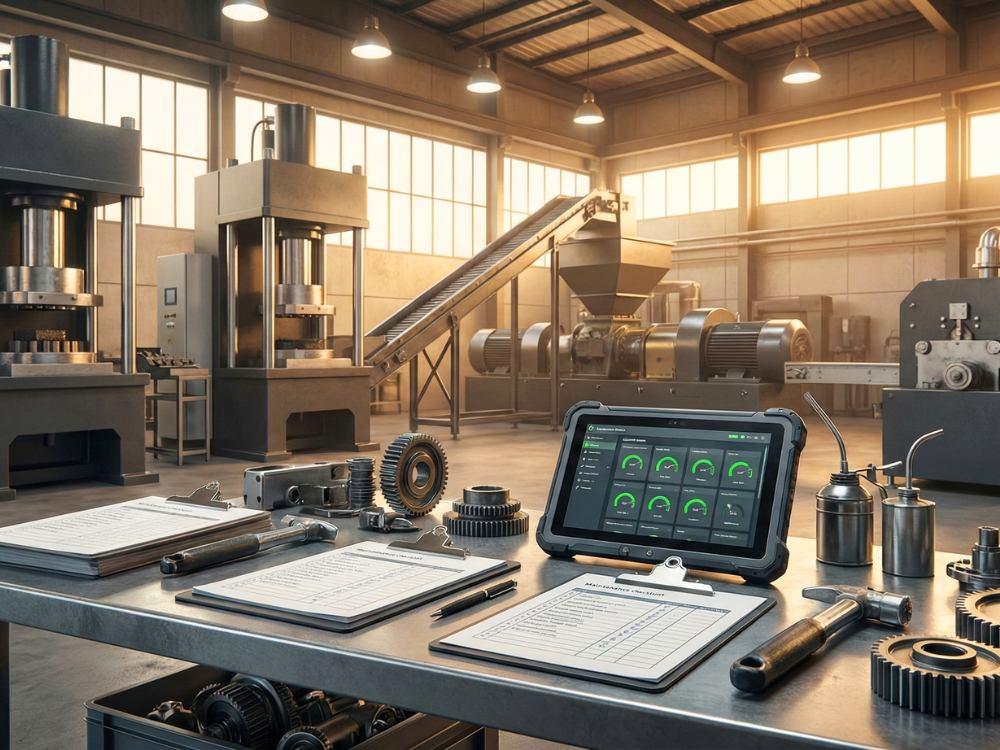
Briquette manufacturing plants achieve 95%+ operational uptime through systematic preventive maintenance programs that address carbonization kilns, briquette pressing machines, drying systems, and material handling equipment before failures occur. Structured maintenance schedules reduce unplanned downtime from 15-20% to below 5%, protecting production capacity and customer delivery commitments.
Understanding Briquette Plant Downtime Costs
Production interruptions in coconut charcoal briquette facilities create cascading financial impacts beyond immediate lost output. A single 8-hour shift shutdown in a 5-ton daily capacity plant eliminates approximately 1.65 tons of finished product worth $2,500-3,300 in wholesale value, while labor costs, utility expenses, and overhead continue regardless of production status.
Hidden Downtime Costs:
- Revenue Loss: Missed production of 1.65 tons per 8-hour shift at $1,500-2,000/ton wholesale pricing
- Fixed Cost Absorption: Labor, facility rent, utilities continue during non-production periods
- Customer Penalties: Late delivery fees, lost customer confidence, order cancellations
- Emergency Repair Premiums: Rush spare part procurement at 200-300% normal costs
- Quality Variations: Restart procedures and system recalibration affect product consistency
Manufacturing facilities operating without preventive maintenance programs typically experience 15-20% unplanned downtime annually, translating to 55-73 lost production days. Systematic maintenance reduces this to 3-5% downtime (11-18 days yearly), directly protecting 40-55 production days and $150,000-275,000 in annual revenue for medium-scale operations.
The investment in preventive maintenance programs typically costs $15,000-25,000 annually for medium-scale briquette plants (3-5 tons daily capacity), delivering 6-15x return through downtime reduction and equipment lifespan extension.
Critical Equipment Systems Requiring Maintenance
Briquette manufacturing involves four primary equipment categories, each with distinct maintenance requirements and failure patterns.
Carbonization Kiln Systems
Carbonization kilns convert raw coconut shells into charcoal through controlled pyrolysis at 400-600°C temperatures over 6-8 hour cycles. Kiln maintenance focuses on structural integrity, temperature control accuracy, and emission management.
Kiln Maintenance Components:
Refractory Lining Inspection (Monthly): High-temperature refractory bricks deteriorate through thermal cycling and chemical exposure. Inspect for cracks, spalling, or loose sections that compromise heat retention and fuel efficiency. Minor repairs prevent complete lining failures requiring 3-5 day shutdowns for full replacement.
Temperature Sensor Calibration (Quarterly): Thermocouple accuracy degrades over time, causing carbonization temperature variations that affect charcoal quality. Calibrate sensors against certified reference standards, replacing units showing ±15°C deviation from actual kiln temperatures.
Airflow Control System (Weekly): Damper mechanisms and air injection ports require cleaning to maintain oxygen control during carbonization. Buildup of tar deposits restricts airflow, extending carbonization time and reducing throughput by 10-15%.
Kiln Door Seals (Monthly): High-temperature gasket materials compress and degrade, allowing air infiltration that disrupts oxygen-limited pyrolysis. Replace seals showing visible gaps or heat escape patterns around door perimeters.
Carbonization System Failure Modes:
Complete kiln lining failure requires 3-5 days for cooling, removal, and reconstruction at $5,000-8,000 material and labor costs. Temperature sensor failures cause batch inconsistency and quality rejections. Airflow control problems extend cycle times by 20-30%, reducing daily throughput from 5 tons to 3.5-4 tons.
Briquette Pressing Machines
Hydraulic or screw-press machines compress carbonized charcoal powder into shaped briquettes under 100-200 bar pressures. Press maintenance emphasizes hydraulic system integrity, die condition, and drive mechanism reliability.
Pressing Machine Maintenance Schedule:
Hydraulic System Inspection (Weekly): Check hydraulic fluid levels, pressures, and leak indicators. Low fluid levels or pressure drops below 150 bar indicate seal failures or pump degradation. Replace hydraulic oil every 1,500 operating hours or annually, whichever occurs first.
Pressing Die Condition (Daily): Inspect die cavities for wear, cracks, or dimensional changes affecting briquette size consistency. Dies showing 2mm+ dimensional deviation require replacement to maintain product specifications. Chromium-plated dies last 80,000-100,000 cycles; standard steel dies require replacement after 40,000-60,000 cycles.
Drive Belt/Chain Tension (Weekly): Conveyor systems feeding charcoal powder to press hoppers use belt or chain drives requiring proper tension maintenance. Loose belts slip under load, reducing feed consistency and causing press starvation. Over-tensioned drives accelerate bearing wear and increase power consumption.
Press Platen Alignment (Monthly): Misaligned press platens create uneven pressure distribution, producing briquettes with density variations and structural weaknesses. Check platen parallelism using precision straightedges; adjust mounting bolts to maintain 0.5mm maximum deviation across platen surface.
Common Pressing Machine Failures:
Hydraulic seal failures cause gradual pressure loss over 2-3 days before complete press shutdown. Die cracking produces malformed briquettes requiring production stops for die replacement (2-4 hour changeover). Drive chain breakage halts material feeding, requiring emergency replacement at 4-6 hour downtime cost.
Drying and Curing Systems
Pressed briquettes contain 15-20% moisture and require drying to below 6-8% for export quality standards. Drying systems use solar exposure, hot air circulation, or kiln drying over 3-7 day periods.
Drying System Maintenance:
Circulation Fan Maintenance (Monthly): Hot air drying systems rely on industrial fans moving 5,000-10,000 m³/hour airflow. Clean fan blades and housings to maintain airflow efficiency. Worn bearings create vibration and noise indicators; replace before catastrophic bearing seizure destroys motor windings.
Heating Element Inspection (Quarterly): Electric or gas-fired heaters require element condition checks and combustion efficiency testing. Carbon buildup on heating surfaces reduces heat transfer efficiency by 15-25%, extending drying time and increasing energy costs.
Moisture Control Sensors (Monthly): Automated drying systems use humidity and moisture sensors for cycle control. Sensor drift causes over-drying (increasing brittleness and breakage) or under-drying (failing moisture specifications). Calibrate sensors monthly against reference moisture meters.
Conveyor System Lubrication (Weekly): Multi-level drying racks use motorized conveyor systems for briquette movement through drying zones. Lubricate drive chains, bearing assemblies, and pivot points to prevent seizing and uneven material flow.
Drying System Failure Impacts:
Fan motor failures halt entire drying capacity, creating production bottlenecks as pressing output exceeds drying throughput. A 48-hour fan repair delay creates 10-12 tons of wet briquette backlog requiring extended drying time that delays shipping schedules by 5-7 days.
Material Handling and Processing Equipment
Coconut shell reception, crushing, screening, and finished product packaging involve conveyors, elevators, crushers, and screening systems requiring coordinated maintenance.
Material Handling Maintenance:
Crusher Blade Inspection (Weekly): Hammer mills or jaw crushers reduce carbonized charcoal to powder consistency for pressing. Worn blades produce oversized particles that affect pressing quality and briquette density. Replace blades when particle size testing shows 15%+ material exceeding 2mm size specification.
Conveyor Belt Tracking (Weekly): Misaligned conveyor belts contact side guards, causing belt damage and material spillage. Adjust tracking rollers to maintain centered belt travel. Replace belts showing 10mm+ edge wear or visible cord exposure before catastrophic tearing occurs.
Vibrating Screen Mesh (Bi-Weekly): Screening systems separate charcoal powder into size fractions for consistent pressing. Torn mesh allows oversized particles into pressing hoppers, affecting briquette quality. Replace mesh sections showing holes larger than specified aperture size.
Bucket Elevator Maintenance (Monthly): Vertical conveyors use bucket chains to elevate materials between processing levels. Inspect bucket attachment points for cracks or loosening. Lubricate drive sprockets and check chain tension to prevent catastrophic chain failure that damages elevator housings.
Material Handling Failure Scenarios:
Conveyor belt tears halt all downstream processes until repair completion (4-8 hours for emergency splicing). Crusher blade failures reduce particle size control, creating pressing quality problems that persist for 1-2 production days while system purges oversized material.
Implementing Structured Maintenance Programs
Effective preventive maintenance requires documented schedules, trained personnel, spare parts inventory, and performance tracking systems.
Daily Maintenance Routines
Daily equipment inspections catch developing problems before failures occur. Operators conduct visual checks and basic measurements during production shifts.
Morning Startup Inspection (30 minutes):
- Verify hydraulic pressures and oil levels in pressing machines
- Check carbonization kiln temperatures and airflow indicators
- Inspect conveyor belt alignment and drive chain tension
- Test emergency stop systems and safety interlocks
- Review previous shift maintenance logs for unresolved issues
Production Monitoring (Ongoing):
- Track briquette pressing cycle times (variation indicates die wear or pressure problems)
- Monitor drying temperature consistency (fluctuation suggests heating element degradation)
- Observe abnormal noises, vibrations, or smells indicating developing failures
- Document any quality variations tied to specific equipment performance
End-of-Shift Inspection (30 minutes):
- Clean pressing dies and hoppers to prevent charcoal powder buildup
- Lubricate exposed chain drives and bearing points
- Check electrical connections for heat discoloration or looseness
- Record operating hours for scheduled maintenance triggers
- Report any anomalies to maintenance supervisor for follow-up
Daily routines require minimal time investment (60-90 minutes total) but catch 40-50% of developing problems before they cause unplanned shutdowns.
Weekly Maintenance Procedures
Weekly maintenance addresses components requiring more frequent attention than monthly schedules but less than daily monitoring.
Hydraulic System Service (2 hours weekly):
- Check all hydraulic line connections for leaks or seepage
- Measure hydraulic fluid temperature during operation (excessive heat indicates pump problems)
- Clean hydraulic reservoir breather filters to prevent contamination
- Test pressure relief valve operation to prevent over-pressure damage
- Inspect hydraulic cylinder rod seals for fluid leakage
Electrical System Inspection (1 hour weekly):
- Check motor operating temperatures using infrared thermometer (hot spots indicate bearing or winding problems)
- Inspect electrical panel connections for arcing marks or overheating
- Test control system relays and contactors for proper operation
- Verify emergency stop button functionality and safety circuit integrity
- Measure motor current draw to detect overload conditions
Drive System Maintenance (2 hours weekly):
- Adjust belt tension on all conveyor drives to manufacturer specifications
- Lubricate all bearing assemblies according to equipment manuals
- Check gear reducer oil levels and inspect for metal particles
- Inspect coupling alignments between motors and driven equipment
- Tighten loose mounting bolts on motors, gearboxes, and drive assemblies
Weekly procedures prevent 30-35% of equipment failures through early detection and minor adjustments before major component damage occurs.
Monthly Comprehensive Inspections
Monthly maintenance provides deeper system evaluation requiring partial equipment shutdowns and specialized tools.
Carbonization Kiln Monthly Service (4 hours):
- Internal inspection of refractory lining condition with kiln fully cooled
- Thermocouple accuracy testing against calibrated reference sensors
- Airflow measurement at injection points to verify ventilation capacity
- Door seal replacement if compression testing shows gaps exceeding 2mm
- Structural weld inspection for stress cracks from thermal cycling
Pressing Machine Monthly Overhaul (6 hours):
- Complete hydraulic system filter replacement and contamination analysis
- Die dimensional measurement with precision calipers (replace if deviation exceeds 2mm)
- Platen alignment verification and adjustment to 0.5mm tolerance
- Pneumatic system pressure testing and valve operation verification
- Safety guard and interlock system functional testing
Drying System Monthly Maintenance (3 hours):
- Fan bearing lubrication and vibration measurement
- Heating element visual inspection and combustion efficiency testing
- Control sensor calibration against certified reference instruments
- Ductwork inspection for blockages or air leakage
- Conveyor system complete lubrication and tension adjustment
Monthly inspections catch developing problems missed by daily and weekly routines, preventing 15-20% of major failures through proactive component replacement.
Quarterly and Annual Overhauls
Major maintenance intervals address components with longer service intervals but requiring significant downtime for complete servicing.
Quarterly Major Services (8-12 hours per quarter):
- Complete pressing die replacement or refurbishment
- Hydraulic pump and cylinder complete overhaul with seal replacement
- Electrical motor bearing replacement and winding resistance testing
- Crusher blade replacement and rotor balancing
- Conveyor belt complete replacement on high-wear sections
Annual Comprehensive Overhaul (3-5 days yearly):
- Carbonization kiln complete refractory lining replacement
- All hydraulic system component rebuild with new seals and filters
- Electrical panel cleaning, connection tightening, and insulation testing
- Complete drive system overhaul including gearbox oil changes
- Structural framework inspection and repair of stress cracks or corrosion
- Safety system complete functional testing and certification
Annual overhauls coordinate with seasonal production slowdowns (rainy seasons affecting drying capacity) to minimize impact on customer delivery schedules.
Spare Parts Inventory Management
Strategic spare parts stocking prevents extended downtimes waiting for component procurement, particularly for equipment with 7-14 day international shipping lead times.
Critical Spare Parts Classification
Category A (Emergency Inventory – On-Site Storage): Components with high failure rates and severe downtime impacts require immediate replacement availability.
- Hydraulic seals and O-rings for pressing machines (2x full seal kits)
- Pressing dies (2-3 spare die sets for each briquette shape)
- Conveyor belt sections (50-100 meters for emergency splicing)
- Electrical contactors and relays (2x each critical component)
- Thermocouple sensors (4-6 backup units)
- Hydraulic hoses and fittings (assorted common sizes)
- Drive belts and chains (1-2 spares for each conveyor)
- Electric motor bearings (2 sets per motor type)
Category A inventory represents $8,000-12,000 investment for medium-scale plants but prevents 70-80% of extended downtimes from parts procurement delays.
Category B (Planned Inventory – 30-Day Procurement): Components with moderate failure rates and longer replacement lead times.
- Hydraulic pumps (1 spare unit)
- Electric motors (1 spare for each critical motor size)
- Gearbox assemblies (1 spare for critical drives)
- Vibrating screen mesh (2-3 replacement sections)
- Kiln door gaskets (1 complete set)
- Fan assemblies (1 backup circulation fan)
- Control system PLCs or controllers (1 spare main unit)
Category C (On-Demand Procurement): Low-failure components or easily sourced items requiring no inventory holding.
- Structural steel for repairs
- Standard fasteners and hardware
- Electrical wire and conduit
- Lubricants and greases
- Welding consumables
- Paint and protective coatings
Supplier Relationship Management
Establish relationships with equipment suppliers and parts distributors to accelerate emergency procurement when inventory stocks deplete.
Preferred Supplier Programs:
- Negotiate priority shipping for emergency orders (24-48 hour delivery for critical components)
- Establish credit terms allowing rapid ordering without purchase order delays
- Maintain equipment serial number records with suppliers for accurate parts matching
- Request supplier technical support for troubleshooting complex failures
- Schedule annual supplier visits for equipment assessment and upgrade recommendations
Local Fabrication Capabilities: Many briquette plant components can be manufactured by local machine shops at 40-60% cost savings versus imported parts with 7-14 day shipping delays.
- Pressing dies (local tool and die shops with CNC capabilities)
- Conveyor frames and support structures (welding fabricators)
- Simple gear drives and pulleys (machine shops with lathe/mill equipment)
- Refractory brick sourcing (local ceramic or foundry suppliers)
Building relationships with 2-3 local fabricators creates backup manufacturing capacity for non-critical components while reducing parts inventory investment.
Maintenance Documentation and Performance Tracking
Systematic record-keeping enables trend analysis, performance optimization, and continuous improvement of maintenance programs.
Equipment Maintenance Logs
Individual Equipment Files: Maintain comprehensive records for each major equipment system tracking:
- Installation date and initial commissioning records
- Complete maintenance history with dates, procedures, and technician names
- Parts replacement records with supplier information and costs
- Failure incidents with root cause analysis and corrective actions
- Operating hour meters and production cycle counts
- Performance measurements (throughput rates, efficiency metrics, quality indicators)
Digital maintenance management systems (CMMS software) streamline documentation and enable automated maintenance scheduling, but simple spreadsheet systems provide adequate tracking for small to medium facilities.
Maintenance Schedule Adherence: Track completion rates for scheduled maintenance tasks:
- Daily inspection completion percentage (target: 95%+ adherence)
- Weekly maintenance on-time completion (target: 90%+ within scheduled week)
- Monthly inspection completion before deadline (target: 100% completion)
- Quarterly overhaul completion within planned shutdown windows
Schedule adherence below 85% indicates resource constraints (insufficient maintenance personnel, inadequate parts availability) or poor scheduling alignment with production demands.
Failure Analysis and Root Cause Investigation
Document all unplanned equipment failures to identify systemic problems requiring corrective action beyond routine maintenance.
Failure Reporting Elements:
- Equipment identification and specific component that failed
- Failure date/time and operating conditions when failure occurred
- Immediate cause (broken part, worn component, operator error, etc.)
- Root cause analysis (inadequate maintenance, design deficiency, operating outside specifications)
- Repair actions taken and parts replaced
- Preventive measures to avoid recurrence
- Total downtime duration and production impact
Failure Pattern Analysis: Monthly review of failure logs identifies recurring problems requiring systematic solutions:
- Components failing before scheduled replacement intervals (increase inspection frequency or upgrade to higher-quality parts)
- Failures clustered around specific equipment or production shifts (operator training issues or equipment-specific problems)
- Seasonal failure patterns (temperature/humidity effects on equipment performance)
- Cascading failures where one component failure damages related systems
Addressing root causes prevents repetitive failures that preventive maintenance alone cannot eliminate.
Key Performance Indicators for Maintenance Programs
Overall Equipment Effectiveness (OEE): OEE = Availability × Performance × Quality
- Availability: Percentage of scheduled production time when equipment operates
- Performance: Actual production rate versus designed capacity
- Quality: Percentage of production meeting specifications without rework
Target OEE above 85% indicates effective maintenance programs. OEE below 75% signals maintenance inadequacy, equipment obsolescence, or operational problems.
Mean Time Between Failures (MTBF): MTBF = Total Operating Hours ÷ Number of Failures
Increasing MTBF trends confirm preventive maintenance effectiveness. Declining MTBF indicates inadequate maintenance or equipment approaching end-of-life requiring replacement.
Maintenance Cost as Percentage of Replacement Value: Annual maintenance spending should remain below 10% of equipment replacement cost for well-maintained systems. Costs exceeding 15% suggest equipment obsolescence where replacement provides better economic value than continued maintenance.
Planned vs Unplanned Maintenance Ratio: Target 80%+ of maintenance activities as planned preventive work versus reactive emergency repairs. Ratios below 70% planned maintenance indicate insufficient preventive programs allowing preventable failures.
Training Maintenance Personnel
Effective maintenance requires skilled technicians with both general mechanical knowledge and equipment-specific expertise.
Core Maintenance Competencies
Mechanical Skills:
- Bearing installation and alignment procedures
- Belt and chain drive tensioning and replacement
- Hydraulic system principles and troubleshooting
- Welding and metal fabrication basics
- Precision measurement with calipers, micrometers, and alignment tools
Electrical Skills:
- Motor control circuit troubleshooting
- PLC basic programming and fault diagnosis
- Sensor calibration and replacement
- Electrical safety procedures and lockout/tagout
- Power quality measurement and correction
Equipment-Specific Knowledge:
- Manufacturer operating manuals and maintenance specifications
- Equipment-specific troubleshooting procedures
- Spare parts identification and ordering
- Safety system operation and testing
- Warranty requirements and documentation
Structured Training Programs
New Technician Onboarding (4-6 weeks):
- Equipment familiarization tours with experienced technicians
- Safety training and lockout/tagout certification
- Basic maintenance procedure practice under supervision
- Equipment manual review and documentation systems
- Parts inventory organization and procurement procedures
Ongoing Skills Development:
- Manufacturer training courses for specialized equipment (annual)
- Cross-training between production and maintenance roles
- Advanced troubleshooting techniques and root cause analysis
- New equipment commissioning and startup procedures
- Safety refresher training and certification renewals
Knowledge Documentation: Create internal maintenance procedures capturing institutional knowledge:
- Step-by-step maintenance procedures with photos or videos
- Troubleshooting decision trees for common problems
- Equipment modification and upgrade documentation
- Supplier contact information and parts cross-references
- Lessons learned from major failures or extended downtimes
Well-trained maintenance teams complete routine procedures 30-40% faster than inexperienced personnel while achieving better quality outcomes and fewer repeat failures.
Outsourcing vs In-House Maintenance
Briquette plants must balance in-house maintenance capabilities against specialized contractor services for optimal cost-effectiveness.
In-House Maintenance Advantages
Immediate Response: On-site technicians respond to equipment problems within minutes, preventing minor issues from escalating into major failures. External contractors typically require 4-24 hour response times for service calls.
Equipment Familiarity: Dedicated maintenance staff develop deep knowledge of specific equipment quirks, failure patterns, and optimal operating procedures that temporary contractors cannot match.
Cost Efficiency for Routine Work: Labor costs for in-house technicians performing daily, weekly, and monthly maintenance typically cost 40-60% less than contracted services for equivalent work.
Production Integration: Internal maintenance teams coordinate with production schedules, understanding seasonal demand patterns and critical delivery periods requiring maximum equipment reliability.
Outsourced Maintenance Applications
Specialized Equipment Overhauls: Major rebuilds requiring specialized tools, training, or certifications often justify contractor services:
- Hydraulic system complete overhauls (specialized pump rebuild equipment)
- Electrical motor rewinding and testing (requires specialized test equipment)
- Refractory kiln lining (specialized high-temperature installation expertise)
- Precision machining and die manufacturing (CNC capabilities)
Capacity Constraints: Small facilities without full-time maintenance personnel use contractors for quarterly and annual overhauls while handling daily and weekly tasks with operators cross-trained in basic maintenance.
Peak Season Coverage: Contract technicians supplement in-house staff during peak production periods when maintenance must occur outside normal business hours to avoid disrupting production.
Hybrid Maintenance Strategies
Most medium-scale briquette plants optimize costs through hybrid approaches:
- In-house team handles: Daily inspections, weekly maintenance, simple repairs, routine parts replacement
- Contractors provide: Quarterly overhauls, specialized system rebuilds, emergency backup during technician absence, training services
This approach balances immediate response capabilities with access to specialized expertise without maintaining excess permanent staff for infrequent specialized work.
Case Study: Maintenance Program ROI
A 5-ton daily capacity briquette plant in West Kalimantan implemented structured preventive maintenance in January 2023 after experiencing chronic equipment reliability problems.
Pre-Implementation Performance (2022):
- Unplanned downtime: 18% of scheduled production time (66 days annually)
- Emergency repair costs: $45,000 annually
- Customer delivery delays: 15-20 incidents yearly
- Overall Equipment Effectiveness (OEE): 68%
Maintenance Program Investment:
- Dedicated maintenance technician hire: $18,000 annually
- Spare parts inventory buildup: $10,000 initial investment
- Maintenance tools and equipment: $3,500
- CMMS software and documentation: $1,200 annually
- Total first-year investment: $32,700
Post-Implementation Results (2023):
- Unplanned downtime: 4% of scheduled production time (15 days annually)
- Emergency repair costs: $8,000 annually
- Customer delivery delays: 2 incidents yearly
- Overall Equipment Effectiveness (OEE): 89%
Financial Impact:
- Downtime reduction: 51 additional production days × 5 tons × $1,800/ton = $459,000 additional revenue
- Emergency repair savings: $37,000 annually
- Customer relationship improvement: Estimated $25,000 in retained business
- Total annual benefit: $521,000
- ROI: 1,493% first-year return on maintenance investment
The facility achieved payback on maintenance program investment within 3 weeks of implementation through eliminated emergency downtime and improved production consistency.
Implementing Your Maintenance Program
Briquette plants starting preventive maintenance programs should phase implementation over 3-6 months rather than attempting immediate comprehensive programs.
Month 1: Foundation Building
- Document current equipment inventory and condition assessments
- Establish daily inspection routines and reporting procedures
- Create initial spare parts procurement list and place orders
- Hire or designate maintenance personnel and begin basic training
Month 2: Routine Establishment
- Implement weekly maintenance procedures and tracking systems
- Begin maintenance log documentation for all equipment
- Establish supplier relationships and emergency procurement procedures
- Conduct first comprehensive monthly inspections
Month 3: Program Expansion
- Schedule first quarterly overhaul with contractor support if needed
- Implement failure reporting and root cause analysis procedures
- Begin performance tracking (OEE, MTBF, maintenance costs)
- Refine maintenance schedules based on initial experience
Months 4-6: Optimization
- Adjust maintenance frequencies based on actual failure patterns
- Expand spare parts inventory for recurring failure components
- Develop equipment-specific troubleshooting procedures
- Train production operators in basic maintenance support
Phased implementation allows learning and adjustment while demonstrating early wins that build organizational support for continued investment.
Preventive Maintenance Delivers Sustainable Operations
Systematic preventive maintenance programs transform briquette manufacturing from reactive crisis management to predictable, efficient production operations. The 6-15x return on maintenance investment comes through eliminated emergency downtimes, extended equipment lifespan, consistent product quality, and protected customer relationships.
Successful programs require dedicated maintenance personnel, documented procedures, strategic spare parts inventory, and performance tracking that enables continuous improvement. Start with daily inspections and weekly maintenance routines, then expand to comprehensive monthly and quarterly programs as capabilities develop.
Our manufacturing facilities operate 95%+ uptime through disciplined preventive maintenance following these principles. We provide maintenance program development consulting, technician training, and spare parts identification services for briquette manufacturers establishing reliability programs. Contact us to discuss your equipment maintenance challenges and develop customized programs for your production environment.