
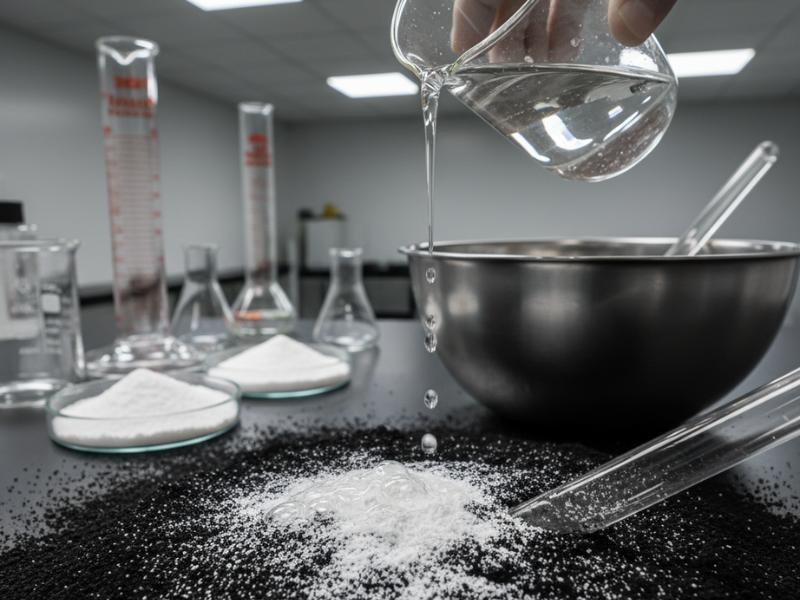
The binder you choose determines whether coconut charcoal briquettes hold their shape during shipping or crumble into unusable dust. After testing dozens of binding formulations over 15 years, we’ve learned that binder selection affects burn characteristics, ash production, and manufacturing efficiency as much as the charcoal raw material itself.
Here’s what you need to know about binder science for producing consistent, high-performance coconut shell charcoal briquettes.
Why Binders Matter in Charcoal Production
Carbonized coconut shell emerges from kilns as loose powder and irregular pieces. Without binding agents, this material cannot form the shaped briquettes that customers require. Binders provide the adhesive force that holds charcoal particles together under compression while maintaining structural integrity during drying, packaging, and use.
The right binder creates strong particle bonds without compromising combustion characteristics. Poor binder choices produce weak briquettes that break during handling, create excessive ash during burning, or introduce chemical odors that affect flavor in hookah and BBQ applications.
One Middle Eastern importer returned a full shipment after customer complaints about unusual taste during shisha sessions. Laboratory analysis revealed the previous supplier had used petroleum-based binders that volatilized during combustion and affected smoke flavor. That quality failure cost them a major account and damaged their reputation across the regional hookah lounge market.
Tapioca Starch: The Industry Standard
Tapioca starch remains the most widely used binder in premium coconut charcoal production. This natural carbohydrate derived from cassava roots provides excellent binding strength with minimal combustion impact.
Chemical composition and binding mechanism:
Tapioca starch consists primarily of amylose and amylopectin polymers that form hydrogen bonds with charcoal particles when combined with water and heat. During the mixing and compression process, starch granules absorb water, swell, and create an adhesive matrix that coats and connects individual charcoal particles.
As briquettes dry, water evaporates and starch molecules crystallize into rigid structures that lock particles in place. This gelatinization and retrogradation process creates mechanical bonds strong enough to withstand typical handling and shipping stress while remaining completely combustible without residue formation.
Formulation specifications:
Standard tapioca binder formulations use 5-8% starch by weight of total briquette mass. Lower percentages (3-4%) produce weak briquettes prone to breakage. Higher percentages (10%+) create excessive ash and reduce calorific value without meaningful strength improvements.
The starch-to-water ratio affects mixing consistency and final product characteristics. We use 1 part tapioca starch to 3 parts water, creating a slurry that distributes evenly throughout charcoal powder during mixing. This ratio produces paste consistency that flows through mixing equipment efficiently while providing adequate binding strength.
Processing parameters:
Mix tapioca slurry with carbonized coconut powder for 8-12 minutes to ensure complete distribution. Insufficient mixing creates weak spots where binder concentration is inadequate. Extended mixing beyond 15 minutes provides no additional benefit and wastes production time.
Apply compression pressure of 10-15 tons per square inch during briquette molding. This force activates starch binding by bringing particles into intimate contact while forcing air pockets from the mixture. Lower pressures produce loose, weak briquettes. Excessive pressure crushes charcoal particles and creates overly dense products with poor ignition characteristics.
Performance characteristics:
Tapioca-bound briquettes produce 3-5% ash content during combustion compared to 8-12% ash from some alternative binders. This low ash production reduces cleanup requirements and improves heat output efficiency.
The binder burns completely at temperatures above 400°C, contributing approximately 200 kcal/kg to total calorific value. This energy addition partially offsets the reduced charcoal content that binder volume represents.
Tapioca creates no flavor impact in hookah or BBQ applications. The starch volatilizes cleanly during combustion without producing aromatic compounds that transfer to food or tobacco smoke.
Cost considerations:
Food-grade tapioca starch costs $0.80-1.20 per kilogram in Indonesian markets. At 6% binder content, this adds approximately $0.05-0.07 per kilogram to raw material costs. Regional pricing varies significantly, with imported tapioca starch in some markets costing 40-60% more than domestic Indonesian supplies.
Modified Starch Binders
Chemical modification of natural starches improves specific performance characteristics while maintaining the environmental and combustion benefits of organic binders.
Oxidized starches:
Treatment with hydrogen peroxide or sodium hypochlorite creates oxidized starch variants with enhanced binding strength at lower usage rates. These modified starches form stronger hydrogen bonds with charcoal particles, allowing formulations using 4-5% binder content instead of standard 6-7% ratios.
The reduced binder requirement increases charcoal content per briquette, improving calorific value by approximately 150 kcal/kg and reducing ash content by 0.5-1%. Some European buyers specifically request oxidized starch formulations to maximize burn performance.
Modified starches cost 30-50% more than standard tapioca but the reduced usage rate makes final production costs comparable. Processing parameters remain similar to standard starch formulations with minor adjustments to mixing time and water ratios.
Cross-linked starches:
Chemical cross-linking creates starch polymers with higher temperature stability and moisture resistance. These variants work well for products destined to humid climates where standard starch binders can soften and weaken during extended storage.
Cross-linked starches require slightly higher compression pressures (12-18 tons per square inch) to activate binding but produce briquettes with 15-20% higher crush resistance. This improved durability reduces breakage during shipping to distant markets.
The specialized nature of cross-linked starches limits availability and increases costs by 60-80% compared to standard tapioca. We reserve these materials for premium product lines serving buyers who prioritize maximum durability over cost optimization.
Read: Two-Zone Grilling with Coconut Briquettes
Alternative Natural Binders
Several natural alternatives to tapioca starch provide viable binding performance with different cost and availability profiles.
Cornstarch:
Corn-derived starch offers similar binding mechanisms and performance to tapioca with 5-8% usage rates producing comparable briquette strength. Combustion characteristics match tapioca closely with 3-5% ash production and neutral flavor impact.
Cornstarch costs 10-20% less than tapioca in regions with large corn industries but availability in Indonesia and Southeast Asia remains limited. Import logistics make cornstarch economically attractive only for operations located near major corn-producing regions.
Potato starch:
Potato starch creates stronger initial binding than tapioca, allowing reduced usage rates of 4-6% while maintaining structural integrity. The higher amylose content produces more rigid particle bonds after drying.
Availability limits potato starch viability for most Indonesian producers. European operations may find this binder attractive due to regional potato processing industries and local supply chains.
Molasses:
Sugarcane or sugar beet molasses provides binding through caramelization during drying rather than starch gelatinization. Usage rates of 8-12% by weight create adequate briquette strength with distinctive dark brown coloration.
Molasses combustion produces slightly higher ash content (5-7%) compared to starch binders and can create subtle sweet odor during ignition. Some BBQ charcoal markets accept or prefer this characteristic, while hookah applications generally avoid molasses due to potential flavor transfer.
Cost advantages make molasses attractive at $0.40-0.60 per kilogram in sugar-producing regions. The higher usage rate partially offsets unit cost savings but total binder expense remains 20-30% lower than tapioca formulations.
Clay binders:
Natural clay minerals like bentonite provide binding through particle interlocking rather than chemical adhesion. Usage rates of 3-5% create moderately strong briquettes with good moisture resistance.
Clay binders produce 8-15% ash during combustion, significantly higher than organic alternatives. This ash production and the mineral residue characteristics make clay-bound briquettes unsuitable for premium hookah and BBQ markets. Industrial heating applications tolerate higher ash content, making clay viable for lower-cost product segments.
Read: Wholesale Coconut Charcoal Briquettes from Indonesia
Synthetic and Chemical Binders
Petroleum-derived and synthetic binders offer specific performance advantages but raise environmental and combustion quality concerns.
Sodium lignosulfonate:
This wood pulp processing byproduct creates strong binding at 4-6% usage rates with good moisture resistance. The material costs $0.50-0.70 per kilogram, making it economically attractive.
Combustion produces distinctive sulfur odor and elevated ash content (6-9%) that limits applications to industrial uses. Food-related applications (BBQ) and hookah products require odor-neutral combustion that lignosulfonate cannot provide.
Polyvinyl alcohol (PVA):
Synthetic PVA polymers create exceptionally strong binding at low usage rates (2-3%) with excellent moisture resistance. Briquettes bound with PVA resist crumbling and maintain structural integrity through extreme shipping conditions.
Environmental concerns and combustion byproducts make PVA unacceptable for food-contact applications. Most international buyers specifically prohibit synthetic binders in product specifications due to air quality and health concerns during combustion.
Petroleum-based binders:
Coal tar derivatives and petroleum resins provide strong, water-resistant binding but volatilize during combustion to produce aromatic hydrocarbons. These compounds create characteristic chemical odors that transfer to food and hookah smoke.
Health regulations in European and North American markets increasingly restrict or prohibit petroleum binders in products intended for food preparation or smoking applications. We eliminated these materials from all formulations in 2012 after several buyers raised specification concerns.
Formulation Optimization Strategies
Achieving optimal binder performance requires balancing multiple variables across the production process.
Particle size distribution:
Charcoal powder particle size affects binder requirement and final briquette characteristics. Finer particles (60-80 mesh) require 6-8% binder content due to increased surface area needing coverage. Coarser particles (20-40 mesh) need only 4-5% binder but produce weaker mechanical bonds.
We use 40-60 mesh particle distribution that balances binding efficiency with structural strength. This produces consistent results across batch variations in raw material carbonization.
Moisture content management:
Optimal mixing moisture content ranges from 18-22% of total mass including binder solution. Lower moisture prevents adequate binder distribution. Excessive moisture extends drying time and can cause briquette deformation.
Control water addition precisely using calibrated metering systems. Manual water addition creates batch-to-batch variations that affect product consistency.
Compression timing:
Mold briquettes within 5-10 minutes of completing mixing operations. Delayed compression allows binder settling and moisture migration that reduces binding efficiency. Extended delays exceeding 30 minutes require remixing before compression.
Drying rate control:
Rapid drying can cause surface case-hardening where exterior layers dry and shrink while interior moisture creates internal stress. This produces surface cracks and structural weaknesses. Gradual drying at 80-90°C for initial stages followed by 100-110°C for final moisture removal creates uniform strength throughout briquette structure.
Quality Testing and Verification
Systematic testing ensures binder formulations meet performance requirements consistently.
Crush strength testing:
Apply compressive force to dried briquettes using calibrated testing equipment or manual methods. Quality briquettes withstand 25-35 kg force before fracturing. Products showing crush strength below 20 kg indicate inadequate binding requiring formulation adjustment.
Test 5-7 briquettes from different batch locations to verify uniform binding throughout production runs.
Drop testing:
Drop briquettes from 1 meters onto concrete surfaces. Quality products remain intact or show minor edge chipping. Briquettes that shatter or crumble indicate insufficient binder content or improper compression.
This simple field test correlates well with real-world shipping and handling performance. Products passing drop tests rarely generate customer complaints about breakage.
Ash content analysis:
Burn sample briquettes completely and weigh residual ash. Calculate ash percentage relative to original briquette weight. Target specifications of 2- 3% ash indicate proper binder selection and usage rates.
Ash content exceeding 7% suggests excessive binder usage, wrong binder selection, or contamination with mineral impurities.
Combustion testing:
Light test briquettes and observe ignition time, flame characteristics, and smoke production. Quality formulations ignite within 10-15 minutes using electric coil burners and burn with minimal visible smoke after full ignition.
Unusual odors during combustion indicate binder problems requiring immediate investigation and correction.
Read: Export Packaging Engineering: Cartons, Inner Bags, Pallets, Straps
Environmental and Regulatory Considerations
Binder selection must address environmental impact and compliance requirements in target markets.
Food safety compliance:
European Union regulations require food-contact charcoal to use only approved binders on positive lists. Tapioca and other food-grade starches meet these requirements. Synthetic and chemical binders require specific authorization that most manufacturers cannot obtain economically.
United States FDA guidelines similarly restrict binders for BBQ charcoal to materials generally recognized as safe (GRAS). Natural starches qualify while most synthetic alternatives do not.
Air quality standards:
Some jurisdictions regulate volatile organic compound (VOC) emissions from charcoal combustion. Petroleum-based binders produce VOC emissions that may exceed local limits in California and other regions with strict air quality standards.
Natural organic binders produce minimal VOC emissions and pose no compliance concerns in any known market.
Sustainability certifications:
Several international certification programs for sustainable charcoal specifically require natural, renewable binders. FSC (Forest Stewardship Council) and similar programs exclude petroleum derivatives and synthetic polymers from certified products.
Our tapioca-based formulations support sustainability claims that increasingly matter to environmentally conscious buyers in European and North American markets.
Practical Recommendations
After testing numerous binder combinations and formulations, we’ve standardized on tapioca starch at 6% usage rate for our export products. This formulation provides the optimal balance of binding strength, combustion performance, cost efficiency, and market acceptance.
New producers should start with proven tapioca formulations rather than experimenting with alternative binders. The time and material costs of formulation development rarely justify marginal performance improvements or cost savings.
Established operations serving specialized markets may benefit from modified starches or alternative natural binders if specific performance requirements justify the additional complexity and cost.
Operations considering alternative binders should conduct thorough combustion testing and obtain customer approval before committing to production scale changes. Binder modifications affect product characteristics that customers use as quality indicators even when objective performance remains acceptable.
Ready to discuss binder specifications and formulation details for your coconut charcoal requirements? Our team can explain how our tapioca-based formulations ensure consistent quality and performance. Contact us today.