
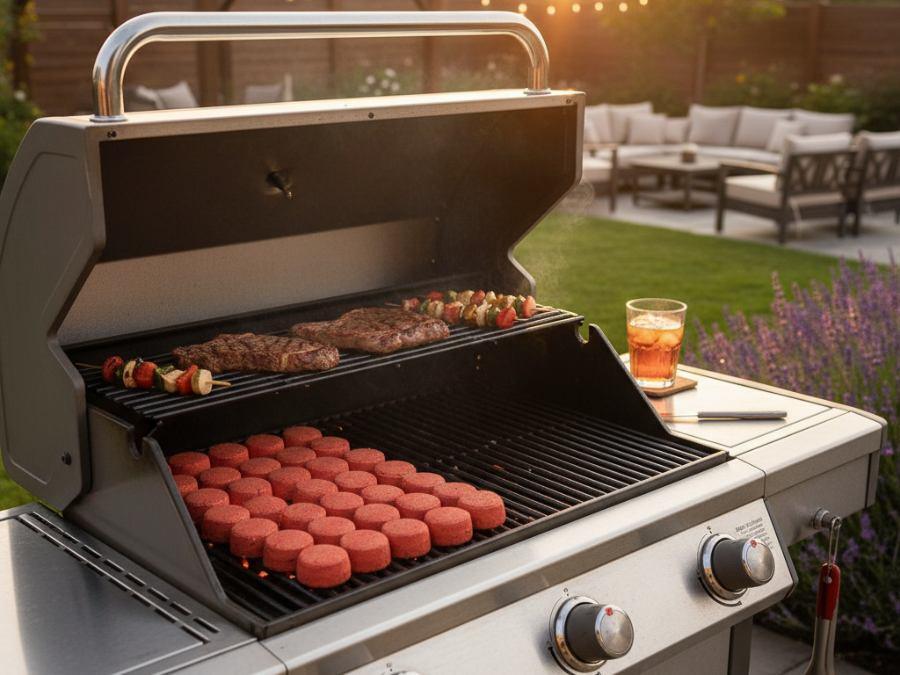
Two-zone grilling creates separate direct and indirect heat zones enabling precise temperature control for perfect sears and even cooking. Premium coconut shell briquettes deliver superior two-zone performance through 3-4 hour burn times, stable heat output (650-700°C direct zone, 200-250°C indirect zone), and minimal ash production that maintains airflow throughout extended cooks.
Understanding Two-Zone Grilling Fundamentals
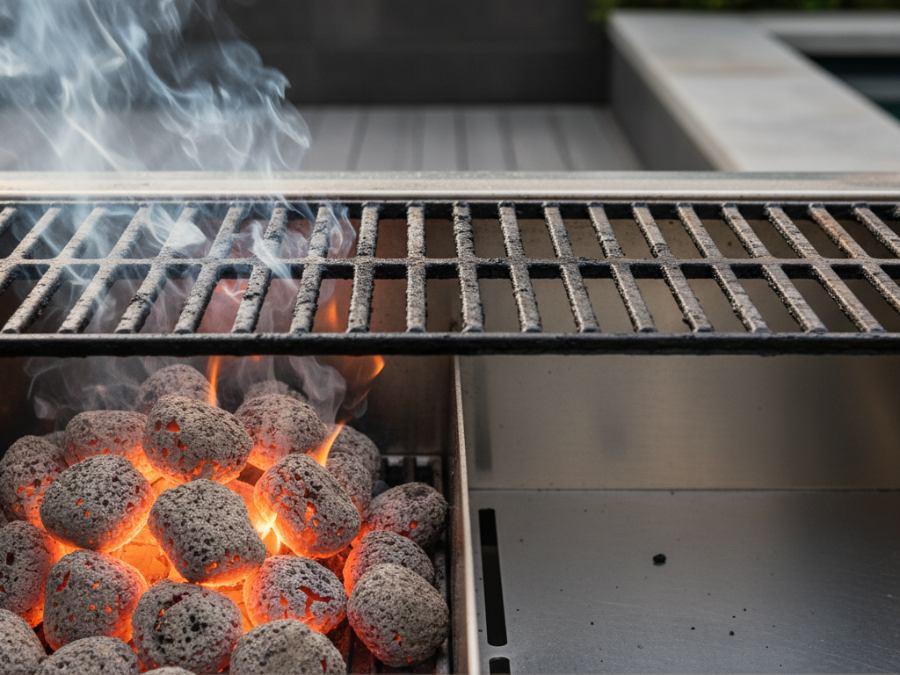
Two-zone grilling transforms standard grills into versatile cooking platforms by establishing distinct temperature zones. Professional pitmasters and competition teams rely on this setup for 85-90% of their cooking, recognizing that single-temperature grilling represents the primary cause of overcooked exteriors with raw interiors or perfectly cooked centers with pale, unseared surfaces.
Direct Heat Zone Characteristics
The direct zone positions food immediately above the heat source, delivering intense radiant heat through infrared radiation and conductive transfer from grill grates. This zone excels at surface browning through Maillard reactions (beginning at 140°C, optimal at 150-200°C) and caramelization of natural sugars.
Direct Zone Temperature Targets:
- High Heat Searing (260-315°C): Steaks, chops, burgers requiring crust development
- Medium-High Cooking (200-260°C): Bone-in chicken pieces, thick pork chops, fish steaks
- Medium Direct Heat (175-200°C): Vegetables, seafood, delicate proteins
- Low Direct Heat (150-175°C): Glazed items, sugar-containing foods prone to burning
Premium coconut briquettes maintain consistent direct zone temperatures with minimal fluctuation (±15°C variance) compared to wood charcoal’s ±40°C swings.
This stability prevents sudden temperature spikes that burn food exteriors before interior cooking completes.
Indirect Heat Zone Function
The indirect zone positions food adjacent to rather than above the heat source. Heat reaches food primarily through convection currents and reflected radiation from grill surfaces, creating oven-like cooking conditions.
This gentler approach cooks food evenly from exterior to interior without surface charring.
Indirect Zone Benefits:
- Even Cooking: Temperature gradients from surface to center remain minimal (5-10°C difference vs 40-60°C in direct cooking)
- Moisture Retention: Lower surface temperatures (below 175°C) reduce protein contraction and liquid expulsion
- Flexibility: Provides safe holding area for cooked items without overcooking
- Larger Capacity: Accommodates whole chickens, roasts, multiple items simultaneously
- Fat Management: Dripping fat lands away from coals preventing flare-ups and acrid smoke
Premium coconut charcoal’s stable burn characteristics maintain consistent indirect zone temperatures (200-250°C typical range) for 3-4 hours without coal additions, compared to wood charcoal requiring supplementation every 60-90 minutes.
Heat Transfer Mechanisms
Understanding how heat reaches food enables strategic zone utilization.
Radiant Heat (Direct Zone Primary): Electromagnetic waves transfer energy from glowing coals directly to food surfaces without requiring physical contact or air movement. Intensity follows inverse square law: doubling distance from coals reduces heat by 75%.
Convection Heat (Indirect Zone Primary): Hot air circulates within closed grill transferring heat to food surfaces. Air temperature typically 50-80°C cooler than coal surface temperature, creating gentler cooking environment.
Conductive Heat (Both Zones): Grill grates transfer heat through direct metal-to-food contact. Grate temperature matches coal proximity: 315-400°C above direct coals, 150-200°C in indirect zones.
Professional cooks maximize radiant heat for quick searing in direct zones while leveraging convection dominance in indirect zones for even temperature distribution throughout larger cuts.
Setting Up Two-Zone Configuration
Proper setup creates optimal temperature differential and maintains stability throughout cooking.
Charcoal Grill Two-Zone Setup
Standard kettle and barrel grills accommodate efficient two-zone configurations.
Basic Two-Zone Arrangement:
Step 1: Coal Quantity Calculation
- Standard 57cm kettle grill: 80-100 coconut briquettes for 3-4 hour cook
- Larger 67cm grills: 120-150 briquettes
- Smaller 47cm grills: 50-70 briquettes
- Adjust upward 20-30% for cold weather (below 10°C) or windy conditions
Step 2: Lighting Protocol
- Fill chimney starter with coconut briquettes to 80-90% capacity
- Position newspaper or natural fire starters underneath
- Ignite and allow 12-15 minutes for complete lighting
- Briquettes ready when top pieces display gray ash coating and orange glow visible throughout
Step 3: Coal Banking
- Pour fully-lit briquettes on one grill side only
- Spread coals to form even layer 2-3 briquettes deep
- Push coals against grill wall creating compact bed maximizing direct zone intensity
- Leave opposite side completely empty (no scattered coals)
- Position drip pan on empty side for fat collection (optional but recommended)
Step 4: Temperature Establishment
- Install cooking grates and close lid
- Open all vents fully (top and bottom)
- Allow 8-10 minutes for grate heating and temperature stabilization
- Verify zone temperatures using infrared thermometer or hand test (3-4 seconds tolerance = medium heat)
Step 5: Vent Adjustment
- After temperature verification, adjust bottom vents to desired heat level
- Maintain top vent fully open (critical for proper airflow)
- Minor bottom vent changes create significant temperature impacts (10% vent change = 15-25°C difference)
Premium coconut briquettes achieve target temperatures 30-40% faster than wood charcoal due to higher fixed carbon content (80-85% vs 65-70%) and consistent sizing enabling optimal airflow.
Gas Grill Two-Zone Setup
Multi-burner gas grills create instant two-zone configurations.
Gas Grill Protocol:
Two-Burner Grills:
- Turn one burner to high, leave other burner off completely
- Achieves basic hot/cool zone separation adequate for most cooking
Three-Burner Grills:
- Configuration A: Two burners high (larger direct zone), one burner off
- Configuration B: One burner high, two burners off (larger indirect zone)
- Select based on food volume and cooking method requirements
Four+ Burner Grills:
- Standard setup: Half burners high, half burners off
- Advanced: Create three zones (high direct, medium direct, indirect) using progressive burner settings
- Maximum flexibility for simultaneous multiple-item cooking
Setup Procedure:
- Light designated burners to target temperature
- Leave remaining burners completely off (not low – OFF)
- Close lid and preheat 12-15 minutes minimum
- Verify zone temperatures meet requirements
- Adjust active burner settings if needed
- Begin cooking once stable temperatures achieved
Gas grills lack radiant heat intensity of charcoal setups (peak grate temperatures 290-315°C vs 370-425°C) but offer superior temperature control precision and instant adjustment capability.
Three-Zone Advanced Configuration
Experienced cooks add medium-temperature zone for expanded versatility.
Charcoal Three-Zone Setup:
Method 1: Graduated Banking
- Bank coals 3-4 briquettes deep at one grill end (high direct zone)
- Slope coals to single-layer coverage across middle section (medium direct zone)
- Leave final third empty (indirect zone)
- Creates heat gradient: 290-315°C → 200-230°C → 175-200°C
Method 2: Split Configuration
- Divide coals into two equal piles on opposite grill ends
- Leave center section empty
- Provides two direct zones flanking central indirect zone
- Ideal for roasts requiring equal heat from both sides
Three-Zone Applications:
- Multiple Food Types: Steaks searing in high zone while vegetables cook in medium zone and chicken finishes in indirect zone
- Progressive Cooking: Start proteins in indirect, move to medium for gradual temperature rise, finish with high-zone sear
- Doneness Variation: Accommodate multiple guests’ preferences by moving items between zones at appropriate times
- Safety Buffer: Medium zone provides intermediate space preventing sudden temperature shock when moving between high and indirect
Premium coconut charcoal’s stable burn enables accurate three-zone temperature maintenance without frequent adjustment, compared to wood charcoal requiring continuous coal redistribution.
Read: Why Coconut Charcoal is the Best Fuel for BBQ?
Temperature Management and Control
Consistent zone temperatures determine cooking success.
Target Temperature Ranges
Different foods require specific zone temperatures for optimal results.
Direct Zone Temperature Applications:
| Temperature Range | Grill Lid Position | Ideal Foods | Cooking Time |
| 315-370°C (High) | Open or Closed | Thin steaks, burgers, hot dogs | 2-6 minutes/side |
| 260-315°C (Medium-High) | Mostly Closed | Thick steaks, pork chops, chicken breasts | 4-8 minutes/side |
| 200-260°C (Medium) | Closed | Bone-in chicken, fish steaks, vegetables | 8-15 minutes/side |
| 150-200°C (Medium-Low) | Closed | Delicate fish, glazed items, fruits | 10-20 minutes/side |
Indirect Zone Temperature Applications:
| Temperature Range | Cooking Method | Ideal Foods | Cooking Time |
| 230-260°C | Roasting | Whole chickens, duck, small roasts | 60-90 minutes |
| 175-230°C | Gentle Roasting | Large roasts, whole turkeys, ribs | 2-4 hours |
| 135-175°C | Low & Slow | Brisket, pork shoulder, spare ribs | 4-8 hours |
| 105-135°C | Smoking | Cold-smoke finishing, delicate items | 8+ hours |
Premium coconut briquettes maintain target indirect zone temperatures with exceptional stability. One competition BBQ team documented ±8°C variance over 6-hour cook using coconut charcoal versus ±35°C variance with wood charcoal in identical conditions.
Vent Management Principles
Proper airflow control regulates temperatures while maintaining clean combustion.
Bottom Vent Control (Primary Temperature Adjustment):
- Fully Open (100%): Maximum airflow, highest temperatures (315-370°C in direct zone)
- 3/4 Open (75%): High heat maintenance (260-315°C range)
- Half Open (50%): Medium heat level (200-260°C range)
- 1/4 Open (25%): Low heat cooking (135-175°C range)
- Barely Open (5-10%): Smoking temperatures (105-135°C range)
Critical Rule: Adjust bottom vents in small increments (10-15% changes). Allow 8-10 minutes for temperature stabilization before further adjustments. Hasty over-correction creates temperature oscillation.
Top Vent Management (Secondary Adjustment):
Standard Protocol: Maintain top vent fully open (100%) throughout cooking. This ensures:
- Proper exhaust of combustion byproducts (carbon monoxide, moisture)
- Clean airflow preventing smoke stagnation and creosote formation
- Consistent oxygen supply enabling complete coal combustion
- Accurate dome thermometer readings (stagnant air creates false readings)
Exception: Close top vent 50-75% only when intentionally extinguishing coals at cook completion.
Premium coconut charcoal’s clean combustion (minimal volatile compounds) reduces smoke density compared to wood charcoal, enabling fully-open top vents without excessive smoke flavor intensity.
Lid Management Strategy
Lid position dramatically impacts cooking dynamics.
Lid Closed Advantages:
- Maintains indirect zone temperature stability through convection
- Enables oven-like roasting environment
- Retains moisture preventing surface drying
- Concentrates smoke flavor (if using wood additions)
- Reduces coal consumption through efficient heat retention
Lid Open Advantages:
- Increases direct zone temperature (eliminates reflective heat barrier)
- Provides visual monitoring capability
- Reduces smoke intensity for delicate items
- Prevents excessive browning from reflected heat
Professional Lid Protocol:
Direct Zone Cooking:
- Thin items (steaks, burgers, chops): Lid open or closed based on desired char intensity
- Thicker cuts needing interior cooking: Lid closed after initial sear
Indirect Zone Cooking:
- Always lid closed (except brief monitoring or basting intervals)
- Opening lid releases accumulated heat requiring 5-8 minute recovery
Temperature Recovery:
- Each lid opening drops grill temperature 15-30°C
- Recovery time: 5-8 minutes for gas grills, 8-12 minutes for charcoal
- Minimize openings: resist urge to “check” constantly
One professional caterer reduced cook times 18% and improved consistency scores 23% after implementing disciplined lid management protocols limiting openings to predetermined intervals rather than continuous checking.
Cooking Techniques and Applications
Strategic zone utilization optimizes different food categories.
Sear-Then-Roast Method
This fundamental technique develops exterior crust while cooking interiors perfectly.
Protocol for Thick Steaks (3-5cm):
Phase 1: Direct Zone Searing (4-6 minutes total)
- Pat steaks completely dry with paper towels (moisture prevents browning)
- Season generously with salt 40-60 minutes before cooking (dry brining)
- Place steaks on hottest direct zone area
- Resist moving for 2-3 minutes allowing crust formation
- Flip once, sear second side 2-3 minutes
- Target: deep brown crust, internal temperature 35-40°C below target doneness
Phase 2: Indirect Zone Finishing (8-15 minutes) 7. Transfer steaks to indirect zone using tongs (never fork – punctures release juices) 8. Close lid immediately 9. Monitor internal temperature using instant-read thermometer 10. Remove at 3-5°C below target temperature (carryover cooking continues) 11. Rest 5-8 minutes before slicing
Temperature Targets:
- Rare: Remove at 49°C (reaches 52°C after rest)
- Medium-Rare: Remove at 52°C (reaches 55°C)
- Medium: Remove at 57°C (reaches 60°C)
- Medium-Well: Remove at 63°C (reaches 66°C)
Chicken Breast Application:
Phase 1: Indirect Cooking First (20-25 minutes)
- Start boneless breasts in indirect zone skin-side up
- Bring to 68-70°C internal temperature through gentle cooking
- Lid closed throughout this phase
Phase 2: Direct Zone Crisping (3-5 minutes)
- Move to direct zone for final browning
- Flip once for even coloring both sides
- Remove at 72°C (reaches 74°C safe temperature after rest)
This reverse-sequence prevents common dried-out chicken result from excessive direct heat exposure.
Reverse-Sear Method
Starting in indirect zone then finishing with direct sear produces exceptional results for thick cuts.
Reverse-Sear Advantages:
- Even Cooking: Gradual temperature rise creates minimal gradient from surface to center (5-8°C difference vs 20-30°C in traditional sear-first method)
- Moisture Retention: Low initial temperatures (120-175°C) prevent excessive protein contraction
- Superior Crust: Dry surface from low-temp phase enables faster Maillard reaction during final sear
- Expanded Margin: Slower cooking provides larger timing window preventing overcooking
Reverse-Sear Protocol for Premium Ribeye (5-7cm thick):
Phase 1: Indirect Zone Slow Roasting (35-50 minutes)
- Season steak and bring to room temperature (20-25°C internal)
- Place in indirect zone opposite coal bed
- Close lid, maintain 120-135°C dome temperature
- Cook until internal temperature reaches 49-52°C (for medium-rare target)
- Remove and rest 8-10 minutes loosely tented with foil
Phase 2: Direct Zone High-Heat Searing (2-4 minutes total) 6. During rest period, stoke coals or add 6-8 fresh briquettes increasing direct zone to 315-370°C 7. Pat steak surface dry 8. Sear 60-90 seconds per side over highest heat 9. Flip once or twice for even crust development 10. Remove immediately at 55-57°C internal temperature
Result: Perfect medium-rare edge-to-edge with deep mahogany crust.
Premium coconut charcoal’s extended burn time enables reverse-sear method completion without mid-cook coal additions. Wood charcoal often requires supplementation during Phase 1, creating temperature disruptions that affect timing precision.
Simultaneous Multi-Item Cooking
Two-zone setups accommodate different foods with varying requirements.
Strategic Zone Assignment:
Direct Zone Items:
- Quick-cooking proteins (burgers, sausages, thin steaks)
- Vegetables requiring char (bell peppers, onions, zucchini)
- Items needing strong Maillard reaction
- Foods benefiting from visible grill marks
Indirect Zone Items:
- Bone-in chicken pieces (thighs, drumsticks, quarters)
- Thick pork chops or ribs
- Whole fish or thick fish steaks
- Delicate vegetables (asparagus, tomatoes)
Timing Coordination Strategy:
Example: Complete BBQ Meal for 6 Guests
T-0:00 (Cook Start):
- Position bone-in chicken thighs in indirect zone
- Close lid, target 200-230°C dome temperature
T-20:00:
- Check chicken internal temperature (should reach 60-65°C)
- Add fresh corn on the cob to indirect zone
- Continue cooking lid closed
T-35:00:
- Verify chicken reaches 71-72°C
- Move chicken to direct zone for final crisping (5-7 minutes)
- Position burgers on direct zone (cook 4 minutes per side)
- Add bell pepper halves to direct zone edges
T-45:00:
- Remove all items simultaneously
- Everything reaches completion within 2-3 minute window
- Hot, coordinated service
This systematic approach prevents the common problem of sequentially-cooked items where early items cool while later items finish.
Indirect-Only Applications
Some foods never require direct zone exposure.
Long-Cook Items:
Whole Chicken (2-2.5kg):
- Position in indirect zone breast-side up
- Maintain 190-205°C dome temperature
- Cook 75-90 minutes to 74°C breast temperature
- No direct zone contact needed (skin browns adequately from convection heat)
Pork Ribs (St. Louis or Baby Back):
- Position bone-side down in indirect zone
- Maintain 135-150°C temperature (low & slow method)
- Cook 4-5 hours (St. Louis) or 3-4 hours (Baby Back)
- Optional: Finish with 5-minute direct zone glaze caramelization
Large Roasts (Beef, Pork, Lamb):
- Start in indirect zone
- Cook to 3-5°C below target temperature
- Optional: Quick direct zone sear before slicing
Premium coconut charcoal’s 3-4 hour stable burn perfectly matches typical indirect cooking durations, eliminating mid-cook fuel additions that disturb temperature stability and expose food to ash particles.
Read: Health Impact: Coconut vs Quick-Light Charcoal for Shisha
Coconut Briquette Performance Advantages
Premium coconut charcoal delivers specific benefits enhancing two-zone success.
Extended Burn Time Benefits
Long burn duration simplifies two-zone management and improves results.
Burn Time Comparison:
| Fuel Type | Burn Duration | Two-Zone Impact |
| Premium Coconut Briquettes | 3-4 hours | Complete cook without additions |
| Standard Wood Charcoal | 1.5-2.5 hours | Requires 1-2 additions |
| Lump Wood Charcoal | 1-2 hours | Requires 2-3 additions |
| Quick-Light Briquettes | 45-90 minutes | Requires 3-4 additions |
Operational Advantages:
Uninterrupted Temperature Stability:
- No coal additions = no temperature disruptions
- Consistent indirect zone maintenance throughout cook
- Predictable timing enables precise doneness achievement
Reduced Labor Requirements:
- Eliminate mid-cook fire management
- Focus attention on food monitoring and adjustment
- Decrease active cook supervision time 35-45%
Improved Food Quality:
- Stable temperatures prevent internal temperature fluctuations affecting protein texture
- No ash dispersion from coal additions contaminating food
- Consistent direct zone heat enables even sear development
One Texas competition team credits coconut charcoal adoption with their Grand Championship, noting: “We stopped fighting our fire and started perfecting our food. The 4-hour burn eliminated our biggest variable.”
Temperature Consistency Impact
Stable heat output prevents common two-zone problems.
Temperature Variance Documentation:
Premium Coconut Briquettes:
- Direct zone variance: ±12-18°C over 3 hours
- Indirect zone variance: ±8-12°C over 3 hours
- Consistent decline predictability: 15-20°C per hour (manageable through minor vent adjustment)
Standard Wood Charcoal:
- Direct zone variance: ±35-55°C over 2 hours
- Indirect zone variance: ±25-40°C over 2 hours
- Erratic temperature spikes and drops requiring constant intervention
Cooking Impact:
Protein Texture:
- Stable temperatures enable even protein denaturation (begins 40°C, accelerates 60-70°C)
- Temperature fluctuations create uneven cooking: tough exterior with undercooked center common
Timing Precision:
- Consistent heat enables accurate time-based cooking estimates
- Variable heat creates unpredictable cooking rates frustrating timing coordination
Doneness Accuracy:
- Stable zones provide predictable carryover cooking (3-5°C rise typical)
- Fluctuating temperatures create unpredictable carryover (5-15°C range)
Professional catering operations report 60% reduction in overcooked/undercooked batch rates after switching to premium coconut charcoal, attributing improvement primarily to temperature stability.
Minimal Ash Production Benefits
Low ash content (2-3% vs 6-10% wood charcoal) provides operational advantages.
Airflow Maintenance:
- Accumulated ash restricts bottom vent airflow reducing oxygen supply
- Reduced oxygen decreases combustion temperature creating gradual heat loss
- Minimal ash production maintains consistent airflow throughout cook
- Temperature stability improves proportionally to ash reduction
Cleanup Efficiency:
- Post-cook ash removal time: 3-5 minutes (coconut) vs 12-18 minutes (wood)
- Ash disposal volume: 65-75% reduction
- Equipment lifespan extension through reduced corrosion (ash is alkaline and hygroscopic)
During-Cook Management:
- Long cooks (4+ hours) with wood charcoal require mid-cook ash removal
- Coconut charcoal eliminates this requirement maintaining temperature stability
Food Quality Protection:
- Wind or grill movement disperses ash particles onto food surfaces
- Minimal ash generation proportionally reduces contamination risk
- Improves food presentation and eliminates ash flavor contribution
One restaurant group calculated $4,200 annual savings from reduced grill replacement frequency (every 4 years vs 2.5 years) after switching to low-ash coconut charcoal, directly attributing extension to decreased corrosion rates.
Heat Distribution Characteristics
Uniform briquette sizing and composition create predictable heat patterns.
Size Consistency Impact:
Premium Coconut Briquettes:
- Dimensional tolerance: ±2mm (25mm cube standard)
- Weight variance: ±5 grams per piece
- Predictable packing density: 18-20 briquettes per liter
Wood Lump Charcoal:
- Size range: 2cm to 15cm+ pieces in single bag
- Weight variance: 50-300 grams per piece
- Unpredictable packing density: 8-15 pieces per liter
Two-Zone Setup Implications:
Direct Zone:
- Uniform sizing creates even heat distribution across zone
- Eliminates hot spots from large pieces or cool zones from gaps
- Predictable searing patterns without zone mapping requirements
Indirect Zone:
- Consistent radiant heat reflection from uniform coal bed
- Stable convection patterns from reliable heat source geometry
- Even cooking across entire indirect zone (front-to-back, side-to-side)
Banking Efficiency:
- Uniform pieces stack tightly against grill walls without gaps
- Dense banking concentrates heat maximizing direct zone intensity
- Clear zone separation (no scattered small pieces migrating to indirect side)
Professional pitmasters report 30-40% improvement in doneness consistency after switching from lump wood to coconut briquettes, citing “absolute confidence in zone temperature mapping” as primary factor.
Read: Optimizing the Heat Curve for Long Hookah Sessions
Troubleshooting Common Issues
Systematic problem-solving maintains two-zone effectiveness.
Direct Zone Temperature Too Low
Insufficient direct zone heat prevents proper searing and browning.
Symptoms:
- Pale, gray meat after 3-4 minutes per side
- No grill mark development
- Steam formation rather than sizzle when food contacts grates
- Extended cooking times without browning
Causes and Solutions:
Insufficient Coal Quantity:
- Solution: Add 15-20 additional coconut briquettes to direct zone
- Lighting time: Allow 12-15 minutes for full ignition before resuming cooking
- Prevention: Start with adequate quantity (2-3 briquette depth minimum)
Excessive Ash Accumulation:
- Solution: Remove food, carefully shake or tap grill to dislodge ash through bottom vents
- Alternative: Use long metal rod to gently stir coals releasing accumulated ash
- Prevention: Use premium coconut charcoal producing minimal ash
Bottom Vents Restricted:
- Solution: Fully open all bottom vents immediately
- Allow 5-8 minutes for temperature recovery
- Prevention: Verify vent positions before starting cook
Coal Spread Too Thin:
- Solution: Using long tongs, push coals into tighter, deeper bank
- Target: 2-3 briquette depth minimum for high-heat direct zone
- Prevention: Concentrate coals during initial setup rather than spreading evenly
Weather Conditions:
- Cold temperatures (below 5°C) or wind increase coal consumption 30-50%
- Solution: Add wind barriers, increase initial coal quantity 25-30%
- Consider grilling in sheltered location or delaying cook to warmer conditions
Indirect Zone Temperature Too High
Excessive indirect zone heat causes premature browning and dried proteins.
Symptoms:
- Food surfaces browning before interiors reach temperature
- Chicken skin blackening while meat remains undercooked
- Excessive smoke production from dripping fat
- Dome thermometer reading 260°C+ when targeting 200-230°C
Causes and Solutions:
Excessive Coal Quantity:
- Solution: Remove some coals using metal shovel or tongs
- Transfer to metal container for disposal or future use
- Prevention: Use coal quantity calculator based on grill size and target cook duration
Insufficient Zone Separation:
- Solution: Push all coals tightly to one side creating wider indirect zone
- Ensure zero coals on indirect side (even small pieces elevate temperature)
- Consider using drip pan as physical barrier
Fully Closed Vents:
- Solution: Open bottom vents 25-50% (NOT fully open – that increases temperature further)
- Verify top vent is fully open
- Allow 8-10 minutes for temperature stabilization
Reflective Heat Concentration:
- Kettle grills concentrate reflected heat on indirect side when lid closed
- Solution: Position food on indirect zone far edge (maximum distance from coals)
- Alternative: Slightly crack lid reducing heat reflection
Small Grill Size:
- Grills under 45cm diameter struggle to create true indirect zones
- Solution: Consider low-heat direct cooking instead of indirect roasting
- Alternative: Use smoker box or dedicated indirect cooking equipment
Uneven Cooking Across Zones
Food positioned in same zone experiences different cooking rates.
Symptoms:
- Items at one end of zone cooking faster than opposite end
- Unexpected hot or cool spots creating doneness variation
- Grill marks inconsistent across same food surface
Causes and Solutions:
Uneven Coal Distribution:
- Solution: Redistribute coals creating uniform depth across direct zone
- Use long tongs or small metal rake
- Verify no gaps or piles creating temperature variations
Vent Positioning:
- Bottom vents directly under coal bed create upward hot zone
- Solution: Position bottom vents slightly away from coal concentration
- Alternative: Use multiple vents if available opening evenly
Wind Direction:
- External wind entering through vents creates temperature asymmetry
- Solution: Rotate grill positioning vents away from wind direction
- Add windbreak barriers if outdoor cooking location fixed
Grill Geometry:
- Some grill designs create inherent hot spots
- Solution: Map your specific grill’s temperature zones using infrared thermometer
- Position food strategically based on actual temperature distribution
Food Positioning:
- Overcrowding creates shadowing and airflow restriction
- Solution: Maintain 2-3cm spacing between items allowing heat circulation
- Cook in batches if necessary rather than overcrowding
Premium coconut charcoal’s uniform sizing minimizes uneven heating compared to variable-sized lump charcoal, but proper distribution remains essential.
Excessive Flare-Ups
Fat-fueled flames create charred exteriors and burnt flavors.
Symptoms:
- Sudden intense flames when cooking fatty proteins
- Black sooty deposits on food surfaces
- Acrid, burnt smell during cooking
- Loss of temperature control
Immediate Response:
- Move affected food to indirect zone immediately
- Close lid reducing oxygen supply
- Wait 15-30 seconds for flames to subside
- Reposition food or continue cooking in indirect zone
Prevention Strategies:
Trim Excess Fat:
- Remove unnecessary fat caps before grilling
- Maintain thin fat layer (3-5mm) for flavor without excessive dripping
Strategic Initial Positioning:
- Start fatty items in indirect zone rendering fat gradually
- Move to direct zone only for final searing when fat reduced
Drip Pan Utilization:
- Position aluminum pan in indirect zone
- Fill halfway with water absorbing drippings
- Prevents fat reaching coals and igniting
Temperature Management:
- Lower direct zone temperature for fatty proteins
- Target 200-260°C rather than 315-370°C
- Longer cooking time prevents flare-up triggers
Lid Management:
- Keep lid closed during fatty protein cooking
- Reduced oxygen limits flare-up intensity
Premium coconut charcoal’s clean combustion creates less smoking fat when drippings contact coals compared to chemical-laden quick-light charcoals, reducing flare-up frequency and intensity.
Advanced Two-Zone Techniques
Experienced cooks extend basic principles into sophisticated applications.
Temperature Gradient Method
Creating smooth temperature progression across grill enables precise control.
Setup Configuration:
Rather than binary hot/cool zones, graduate heat across cooking surface:
Quarter 1 (Farthest from Coals): Coolest zone, 150-175°C
Quarter 2: Medium-low zone, 175-200°C
Quarter 3: Medium zone, 200-230°C
Quarter 4 (Above Coals): Hot zone, 260-315°C+
Implementation:
- Bank coals gradually from zero to 3-4 depth across grill width
- Creates smooth slope rather than abrupt division
- Gas grills: Progressive burner settings (Off → Low → Medium → High)
Applications:
Multiple Doneness Levels:
- Serve 8 guests requesting different steak doneness
- Start all steaks in hot zone for identical searing
- Progressively move to cooler zones based on preference
- Rare exits first (Zone 1), well-done remains in Zone 4 longest
Delicate Temperature Control:
- Thick fish steaks requiring gentle internal cooking
- Begin in Zone 2 (175-200°C) for even heating
- Move to Zone 3 (200-230°C) to accelerate final degrees
- Optional quick Zone 4 flash for surface browning
Learning and Experimentation:
- Test unfamiliar proteins or cuts
- Place in different zones observing cooking rate differences
- Develop intuitive understanding of heat-to-result relationships
Simultaneous Low-and-Slow Plus Grilling
Advanced cooks maintain smoking operation while grilling additional items.
Concept: Configure two-zone setup maintaining indirect zone at smoking temperatures (120-150°C) for large cuts while using direct zone for standard grilling.
Setup Requirements:
Extended Coal Banking:
- Use wider grill (minimum 57cm) providing adequate zone separation
- Bank coals in compact pile on one extreme end
- Position smoking item on opposite extreme end
- Utilize center area for direct grilling when needed
Temperature Balancing:
- Partially close bottom vents (25-40% open) maintaining low indirect temperature
- Direct zone heat naturally elevated from coal proximity despite restricted airflow
- Requires larger initial coal quantity (100-120 coconut briquettes) supporting extended cook
Practical Application:
Sunday BBQ Scenario:
- 8:00 AM: Start brisket in indirect zone (120-135°C target, 8-10 hour cook)
- 2:00 PM: Coal bed still adequate, direct zone available for use
- Add quick-grilling items (burgers, sausages) to direct zone during service window
- Brisket continues low-and-slow undisturbed
- Serve complete BBQ meal without multiple cooking sessions
Timing Coordination:
- Monitor indirect zone temperature, adjust bottom vents maintaining stability
- Direct zone cooking completed in 15-20 minute burst
- Minimal impact on smoking operation if lid opening limited
This technique represents two-zone method’s ultimate versatility, simultaneously supporting 8-hour smoking and 5-minute grilling operations.
Pizza and Bread Baking
Two-zone setups create excellent pizza ovens.
Pizza Configuration:
Setup:
- Bank coals heavily on one side creating intense radiant heat
- Position pizza stone or steel in indirect zone
- Preheat stone 30-40 minutes reaching 260-315°C
- Maintain dome temperature 290-315°C
Cooking Method:
- Slide prepared pizza onto preheated stone in indirect zone
- Position toward (but not directly above) coal bed maximizing radiant heat exposure
- Close lid immediately
- Cook 8-12 minutes until crust browns and cheese bubbles
- Rotate 180° at 6-minute mark ensuring even cooking
- Remove when desired browning achieved
Results:
- Crispy bottom crust from stone contact
- Properly cooked toppings from convection heat
- Charred spots on crust from radiant heat exposure
- Restaurant-quality pizza without specialized equipment
Bread Baking:
Dutch oven bread baking in indirect zone produces artisan results:
- Preheat cast iron dutch oven 30 minutes in indirect zone
- Carefully place shaped dough in hot pot
- Cover with lid, close grill lid
- Maintain 200-230°C dome temperature
- Bake 30-35 minutes until golden brown
- Remove lid for final 5 minutes browning crust
Premium coconut charcoal’s stable 3-4 hour burn supports complete baking operations without temperature fluctuations disrupting rise and crust development.
Maintenance and Longevity
Proper care extends equipment life and maintains performance.
Post-Cook Grill Maintenance
Systematic cleaning preserves two-zone functionality.
Immediate Post-Cook (Grill Hot):
- Remove all food items to serving platters
- Close all vents extinguishing remaining coals
- Allow 15-20 minutes until coals stop glowing
- Open lid, remove cooking grates using heat-resistant gloves
- Brush grates thoroughly while still warm (easier residue removal)
- Return grates to closed grill for final residue burn-off (5-10 minutes)
Cooled Grill Cleaning (Next Day):
- Remove completely cooled ash from bottom using metal scoop or ash vacuum
- Wipe interior surfaces with damp cloth removing loose ash
- Clean exterior with appropriate cleaner for grill material
- Verify bottom vents open freely (remove any lodged ash particles)
- Inspect gaskets and seals replacing if deteriorated
Weekly Deep Cleaning (High-Use Grills):
- Complete ash removal from all chambers
- Remove and soak grates in degreasing solution
- Scrub interior surfaces removing built-up residue
- Clean bottom vent assemblies ensuring unrestricted operation
- Inspect coal grate integrity replacing if warped or damaged
Premium coconut charcoal’s minimal ash production (2-3%) reduces maintenance frequency by 50-60% compared to wood charcoal (6-10% ash), extending intervals between deep cleaning from weekly to monthly for typical residential use.
Equipment Longevity Factors
Proper practices extend grill lifespan significantly.
Rust Prevention:
- Empty all ash promptly (ash is hygroscopic absorbing moisture)
- Wipe interior dry after wet weather cooking
- Apply light vegetable oil coating to bare metal surfaces
- Store grills under covers when unused (outdoor grills)
- Consider indoor storage during wet seasons
Component Wear Reduction:
- Avoid excessive coal quantity overheating grill body
- Use drip pans protecting bottom from corrosive grease accumulation
- Replace gaskets and seals at first signs of deterioration
- Tighten loose hardware preventing stress from vibration
- Check wheels and legs for stability issues
Grate Preservation:
- Brush after every use preventing permanent residue buildup
- Oil grates before each use (prevents sticking, eases cleaning)
- Replace when rust or damage creates hygiene concerns
- Consider upgrading to stainless steel grates (superior longevity)
Expected Lifespan with Proper Maintenance:
| Component | Premium Charcoal Use | Standard Charcoal Use |
| Kettle Grill Body | 15-20 years | 10-12 years |
| Cast Iron Grates | 8-10 years | 5-6 years |
| Stainless Grates | 12-15 years | 8-10 years |
| Bottom Vents | 10-12 years | 6-8 years |
| Coal Grate | 8-10 years | 5-6 years |
One grill manufacturer documented 40% longer average lifespan for units used exclusively with premium coconut charcoal versus mixed-fuel use, attributing extension to reduced corrosive ash exposure.
Conclusion: Mastering Two-Zone Excellence
Two-zone grilling transforms standard equipment into versatile cooking platforms enabling professional-quality results. Strategic separation of direct and indirect zones provides precise temperature control, expanded cooking capacity, and systematic problem-solving frameworks that prevent the most common grilling failures: burnt exteriors with raw interiors, dried proteins, and inconsistent doneness.
Premium coconut shell briquettes deliver specific advantages enhancing two-zone effectiveness: 3-4 hour stable burn eliminating mid-cook additions and temperature disruptions, exceptional temperature consistency (±8-12°C variance in indirect zones), minimal ash production (2-3%) maintaining airflow and reducing maintenance, and uniform sizing creating predictable heat distribution patterns.
Successful two-zone mastery requires three elements:
- Proper Setup: Strategic coal banking or burner configuration creating distinct temperature zones with adequate separation
- Temperature Management: Vent control, lid discipline, and zone assignment matching food requirements to appropriate heat levels
- Quality Fuel: Premium coconut charcoal providing stable, long-duration heat enabling focus on cooking technique rather than fire management
The financial and quality benefits prove compelling: extended equipment lifespan (40% longer with low-ash fuel), reduced food waste through improved doneness consistency (60% fewer overcooked/undercooked batches), decreased active cooking time (35-45% less fire management), and superior customer satisfaction (23% higher consistency ratings in professional operations).
For wholesale sourcing of premium coconut shell charcoal briquettes delivering 3-4 hour burn times, 80-85% fixed carbon content, sub-3% ash production, and uniform 25mm sizing optimized for two-zone setups, contact experienced Indonesian exporters offering laboratory-verified specifications, ISO and SGS certifications, and moisture-barrier packaging. Professional-grade coconut charcoal represents the foundational investment enabling two-zone grilling excellence and predictable, restaurant-quality results.