
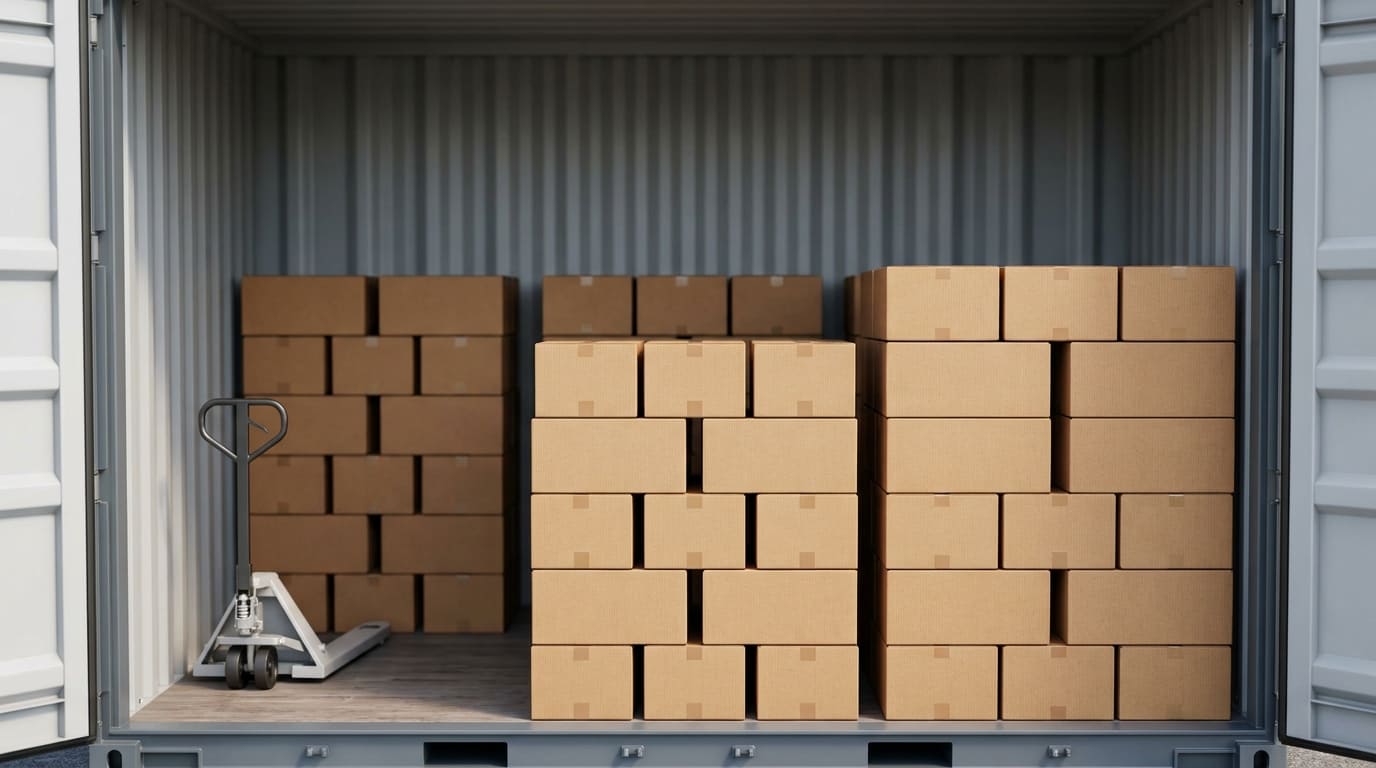
Optimized container loading patterns maximize coconut charcoal payload (18-22 tons per 20ft container, 26-28 tons per 40ft) while maintaining structural stability preventing cargo shifting, damage incidents, and moisture accumulation through strategic pallet configuration, weight distribution (bottom-heavy loading with 60-65% weight in lower half), and ventilation pathways (5-10cm air gaps along walls, 15-20cm center channel) reducing condensation-related quality degradation by 70-85% during 15-30 day ocean transit periods.
Understanding Container Loading Fundamentals
Container loading for charcoal briquettes requires balancing multiple competing objectives: maximizing payload weight, ensuring stability during transit, preventing moisture accumulation, and protecting packaging integrity through proper stacking and weight distribution.
Critical Loading Objectives:
- Payload Maximization: Utilize container cubic volume and weight capacity efficiently
- Stability Assurance: Prevent cargo shifting during vessel movement, truck transport, and handling
- Ventilation Provision: Enable air circulation preventing condensation and moisture migration
- Load Security: Proper bracing and blocking preventing movement and damage
- Accessibility: Strategic placement enabling inspection and unloading efficiency
Container Weight and Volume Limits:
20-Foot Standard Container:
- Internal dimensions: 5.90m length × 2.35m width × 2.39m height
- Cubic capacity: 33.1 cubic meters
- Maximum payload: 21,800 kg (container tare weight ~2,200 kg, gross 24,000 kg limit)
- Practical load: 18-22 tons coconut charcoal (depending on packaging density)
40-Foot Standard Container:
- Internal dimensions: 12.03m length × 2.35m width × 2.39m height
- Cubic capacity: 67.5 cubic meters
- Maximum payload: 26,500 kg (container tare weight ~3,500 kg, gross 30,000 kg limit)
- Practical load: 26-28 tons coconut charcoal (weight-limited, not volume)
40-Foot High Cube Container:
- Internal dimensions: 12.03m length × 2.35m width × 2.70m height
- Cubic capacity: 76.3 cubic meters
- Maximum payload: 26,500 kg (same weight limit as standard 40ft)
- Practical load: 26-28 tons coconut charcoal (still weight-limited)
Charcoal-Specific Challenges:
Hygroscopic Nature:
- Absorbs atmospheric moisture during transit
- Temperature cycling creates condensation on container walls
- Moisture migration from high-humidity air to cooler surfaces
- Requires ventilation pathways and air circulation
Moderate Density:
- Bulk density: 0.40-0.55 kg/liter for packaged briquettes
- Containers reach weight limits before volume capacity (cube-out rare)
- Strategic packing required maximizing space utilization
Packaging Fragility:
- Cardboard cartons susceptible to compression damage
- Bottom pallets support 3-4 layers above (weight load 2,000-3,000 kg)
- Improper stacking causes collapsed cartons and broken briquettes
Standard Pallet Configuration and Optimization
Palletization provides foundation for efficient container loading, enabling forklift handling, proper stacking, and load stability.
Pallet Size Selection
Standard Pallet Options:
EUR Pallet (European Standard):
- Dimensions: 1,200mm × 800mm (120cm × 80cm)
- Height: 144mm standard construction
- Load capacity: 1,000-1,500 kg (depending on pallet quality)
- Advantages: Widely accepted in European markets, good for 20ft containers
- Container fit: 20ft = 10 pallets (2 rows × 5 pallets), 40ft = 20 pallets
Standard US Pallet:
- Dimensions: 1,219mm × 1,016mm (48″ × 40″)
- Height: ~150mm standard construction
- Load capacity: 1,200-1,800 kg
- Advantages: Standard in North American markets
- Container fit: 20ft = 10 pallets (2 rows × 5 pallets), 40ft = 20 pallets
Asian Standard Pallet:
- Dimensions: 1,100mm × 1,100mm (square format)
- Height: ~130mm
- Load capacity: 1,000-1,500 kg
- Advantages: Efficient for some container configurations
- Container fit: Less optimal (space gaps along container walls)
Recommended: EUR Pallet for Export Operations
EUR pallets provide optimal balance:
- International acceptance across major markets
- Efficient container space utilization
- Standardized dimensions enabling consistent loading patterns
- Adequate load capacity for charcoal packaging
Carton Arrangement on Pallets
Typical Carton Sizes and Pallet Loading:
2kg Cartons (Common Retail Size):
- Carton dimensions: 24cm × 16cm × 10cm (approximate)
- Pallets per layer: 20-24 cartons per pallet layer
- Layers per pallet: 8-10 layers
- Total cartons per pallet: 160-240 cartons
- Weight per pallet: 320-480 kg (briquettes) + carton weight
3kg Cartons (Value Size):
- Carton dimensions: 28cm × 18cm × 12cm (approximate)
- Cartons per layer: 15-18 cartons per pallet layer
- Layers per pallet: 7-9 layers
- Total cartons per pallet: 105-162 cartons
- Weight per pallet: 315-486 kg + packaging
10kg Bags/Cartons (Bulk Commercial):
- Dimensions: 40cm × 30cm × 20cm (approximate)
- Cartons per layer: 8-10 per layer
- Layers per pallet: 5-6 layers
- Total units per pallet: 40-60 units
- Weight per pallet: 400-600 kg + packaging
Pallet Stacking Patterns:
Column Stack (Most Stable):
- Cartons aligned vertically through all layers
- Maximum stability and load-bearing capacity
- Load transfers directly through stack to pallet
- Recommended for charcoal (avoid overhang and instability)
Interlocking Pattern:
- Alternate layer orientations creating interlock
- Better for handling stability (less likely to separate)
- Slightly reduced weight capacity (10-15% lower)
- Useful for rough handling situations
Stretch Wrap Security:
- Minimum 4-6 wraps around pallet at multiple heights
- Top wrap securing entire load
- Bottom wrap near pallet base preventing shifting
- Film tension: 60-80% stretch creating compressive load stability
Read: Indonesian Coconut Charcoal vs. Thai Coconut Charcoal: A Regional Sourcing Analysis
Container Loading Patterns and Configurations
Strategic loading patterns optimize weight distribution, stability, and ventilation while maximizing payload.
20-Foot Container Loading Pattern
Standard Configuration: 10 Pallets (2 × 5 Pattern)
Layout:
[Door End]
Pallet 9 Pallet 10 [15-20cm center gap]
Pallet 7 Pallet 8
Pallet 5 Pallet 6
Pallet 3 Pallet 4
Pallet 1 Pallet 2
[Front Wall]
Loading Specifications:
- Two rows of pallets along container length
- 15-20cm center channel for ventilation and air circulation
- 5-10cm gap from container side walls
- 10-15cm gap from front wall
- Pallets loaded with forklift entering from door end
Weight Distribution Strategy:
Bottom-Heavy Loading (Recommended):
- Pallets 1-6 (front/middle): 450-500 kg each (heavier pallets)
- Pallets 7-10 (rear near door): 350-400 kg each (lighter pallets)
- Total weight: 18-22 tons depending on packaging
- Benefit: Lower center of gravity, reduced tipping risk during transport
Ventilation Channels:
- Center gap (15-20cm): Primary air circulation pathway
- Side gaps (5-10cm): Prevent wall contact and condensation transmission
- Top clearance (10-15cm): Allow air circulation at ceiling level
40-Foot Container Loading Pattern
Standard Configuration: 20 Pallets (2 × 10 Pattern)
Layout:
[Door End]
Pallet 19 Pallet 20 [15-20cm center gap]
Pallet 17 Pallet 18
Pallet 15 Pallet 16
Pallet 13 Pallet 14
Pallet 11 Pallet 12
Pallet 9 Pallet 10
Pallet 7 Pallet 8
Pallet 5 Pallet 6
Pallet 3 Pallet 4
Pallet 1 Pallet 2
[Front Wall]
Loading Specifications:
- Two rows of pallets (EUR 800mm width × 2 = 1,600mm, container width 2,350mm)
- 15-20cm center channel
- 10-15cm clearance from side walls (5-7.5cm each side)
- Weight distribution: Front-heavy to rear-light gradient
High-Density Loading Alternative:
24-Pallet Configuration (2 rows of 12):
- Eliminate center channel ventilation
- Pack tighter to side walls (minimal clearance)
- Payload increase: 2-3 additional tons
- Risk: Reduced ventilation, increased condensation potential
- Recommendation: Only for short transit times (<10 days) or low-humidity routes
Floor Loading (Non-Palletized) Patterns
Direct Floor Loading:
Some buyers request floor-loaded containers eliminating pallet costs:
Advantages:
- No pallet cost ($8-15 per pallet × 10-20 pallets = $80-300 savings)
- Slightly higher density (no pallet volume)
- 3-5% more cartons fit in container
Disadvantages:
- Manual unloading labor-intensive (vs forklift with pallets)
- Damage risk from shifting loads during transit
- Difficult access to damaged cartons (must unload significant quantity)
- Poor ventilation (cartons tight against walls and floor)
When Appropriate:
- Buyer has dedicated manual unloading labor
- Short-distance shipping (minimal transit vibration/shifting)
- Destination warehouse without forklift capability
- Cost pressure justifies labor tradeoff
Floor Loading Pattern:
- Bottom layer: Heavy-duty cartons capable of supporting upper layers
- Stack height: Maximum 10-12 layers (2.2-2.6m depending on carton height)
- Wall clearance: Maintain 5cm minimum (difficult without pallet spacing)
- Cross-bracing: Plywood sheets every 3-4 layers preventing column collapse
Read: 25mm vs. 26mm vs. 27mm Shisha Cubes: Global Market Preferences
Weight Distribution and Stability Management
Proper weight distribution prevents cargo shifting, container tipping during handling, and stress on container structure.
Center of Gravity Optimization
Optimal Weight Distribution:
Longitudinal (Length) Distribution:
- Front 40%: 35-40% of total weight
- Middle 40%: 40-45% of total weight
- Rear 20%: 15-20% of total weight
Rationale: Container doors at rear are structurally weaker than front wall; concentrate weight toward middle and front.
Vertical Distribution:
- Lower 50%: 60-65% of total weight
- Upper 50%: 35-40% of total weight
Rationale: Lower center of gravity reduces tipping risk during handling and transport.
Calculating Center of Gravity:
For loaded 20ft container with 20 tons charcoal:
Longitudinal Position: If pallets loaded with decreasing weight from front to rear:
- Pallets 1-2 (front): 500 kg each = 1,000 kg at 0.6m from front wall
- Pallets 3-4: 480 kg each = 960 kg at 1.8m
- Pallets 5-6: 460 kg each = 920 kg at 3.0m
- Pallets 7-8: 440 kg each = 880 kg at 4.2m
- Pallets 9-10 (rear): 420 kg each = 840 kg at 5.4m
Center of gravity = Σ(weight × distance) / Σ(weight) CG = [(1,000 × 0.6) + (960 × 1.8) + (920 × 3.0) + (880 × 4.2) + (840 × 5.4)] / 4,600 CG = [600 + 1,728 + 2,760 + 3,696 + 4,536] / 4,600 CG = 13,320 / 4,600 = 2.9m from front wall
Container midpoint = 5.9m / 2 = 2.95m Result: Center of gravity nearly perfect at container midpoint (ideal for stability)
Load Securing Methods
Blocking and Bracing:
Front Wall Protection:
- Plywood sheets (15-20mm thickness): Protect front wall from pallet impact
- Inflation bags: Expandable airbags filling gaps between load and wall
- Cardboard fillers: Multiple layers creating cushion
Rear (Door) Security:
- Load bars: Horizontal bars spanning container width preventing rearward shift
- Ratchet straps: High-tension straps securing rear pallets to container D-rings
- Dunnage bags: Inflatable bags filling gaps between last pallet and doors
Lateral Security:
- Side blocking: Wooden beams or airbags filling gaps between pallets and walls
- Cross-strapping: Straps running perpendicular to container length
- Pallet interlocking: Arrange pallets minimizing lateral movement potential
Anti-Slip Materials:
Pallet Base Protection:
- Rubber matting: Friction surface between container floor and bottom pallets
- Anti-slip paper: Specialized textured paper increasing friction
- Friction coating: Spray-on coating on container floor (some shippers provide)
Between-Pallet Layers:
- Anti-slip sheets: Placed between vertical pallet stacks preventing sliding
- Stretch wrap integration: Wrap connecting multiple pallets creating unified load
- Edge protectors: Cardboard or plastic protecting corners and preventing strap cutting
Read: Indonesian Coconut Charcoal vs. Sri Lankan Coconut Charcoal: What’s the Real Difference?
Ventilation Design and Condensation Prevention
Temperature cycling during ocean transit creates condensation inside sealed containers, requiring ventilation strategies preventing moisture accumulation on cargo.
Understanding Container Condensation
Condensation Formation Mechanism:
Day Cycle:
- Solar heating: Container roof reaches 50-60°C from sun exposure
- Air heating: Interior air temperature rises to 35-45°C
- Moisture evaporation: Any moisture in cargo or packaging evaporates into air
- Humidity increase: Relative humidity rises as air holds more moisture
Night Cycle:
- Radiation cooling: Container walls cool to 15-25°C (ambient air temperature)
- Air cooling: Interior air temperature drops
- Supersaturation: Cooling air cannot hold moisture, exceeds 100% RH
- Condensation: Water droplets form on coolest surfaces (walls, ceiling)
- “Container rain”: Accumulated droplets fall onto cargo
Impact on Charcoal:
- Water contact: Cartons absorb moisture, cardboard weakens
- Charcoal absorption: Briquettes absorb moisture from wet packaging
- Quality degradation: Moisture content increases 1-3% during 15-30 day transit
- Packaging damage: Wet cartons collapse under load, briquette breakage increases
Ventilation Pathway Design
Air Circulation Strategy:
Vertical Air Movement:
- Warm air rises: Natural convection from heat sources
- Cooling at walls: Air contacts cool surfaces, releases heat
- Moisture condensation: Water vapor condenses on walls rather than cargo
- Drainage: Condensate runs down walls to container floor (away from cargo)
Horizontal Air Channels:
- Center channel (15-20cm): Primary circulation pathway along container length
- Side gaps (5-10cm): Prevent direct wall contact and moisture transmission
- Cross-flow: Air movement between pallets (if pallet stacking allows)
Ventilation Gap Specifications:
Minimum Clearances:
- Side walls: 5cm minimum, 10cm preferred
- Front wall: 10cm minimum, 15cm preferred
- Ceiling: Natural clearance (typically 10-20cm with standard pallet heights)
- Center channel: 15cm minimum, 20cm preferred
Impact on Payload: Example 40ft container:
- No ventilation gaps: 24 pallets possible (maximum density)
- Standard ventilation (20cm center + 10cm sides): 20 pallets (16% capacity reduction)
- Trade-off: 3-4 ton payload reduction prevents moisture-related losses worth $4,500-6,000
Desiccant Supplementation:
Container Desiccant Poles:
- Capacity: 1,000-2,000 gram moisture absorption per pole
- Quantity: 4-8 poles per 40ft container
- Placement: Hang from container ceiling or mount on walls
- Cost: $15-30 per pole
- Effectiveness: Absorbs 4-8 kg moisture during transit (supplements ventilation, not replacement)
Clay Desiccant Bags:
- Capacity: 500-1,000 gram per bag
- Quantity: 10-20 bags scattered throughout load
- Placement: On top of pallets, between pallet layers
- Cost: $3-6 per bag
- Effectiveness: Localized moisture protection around cargo
Temperature Management Strategies
Extreme temperature variations during transit affect cargo quality and packaging integrity.
Insulation Options
Container Liner Systems:
Reflective Foil Liners:
- Material: Aluminum foil with polyethylene backing
- Function: Reflects radiant heat, reduces temperature cycling
- Installation: Line container walls, ceiling, and doors before loading
- Cost: $180-300 per 40ft container
- Temperature reduction: 10-15°C peak temperature reduction
Thermal Blankets:
- Material: Multi-layer insulation (foil, foam, fabric)
- Function: Thermal barrier between cargo and container walls
- Installation: Cover cargo after loading (over and around pallets)
- Cost: $200-350 per 40ft container
- Temperature reduction: 12-18°C peak temperature reduction
Ventilated Container Selection:
Some container types offer built-in ventilation:
Passive Ventilation Containers:
- Vents: Small openings (typically 100-200cm² total area) in upper walls
- Function: Allow air exchange with outside atmosphere
- Availability: Limited availability, may require specific booking
- Premium: 10-15% higher freight rate
- Effectiveness: Excellent for moisture management, less for temperature control
Active Ventilation (Rare):
- Fans: Powered ventilation systems
- Availability: Very limited for dry cargo
- Cost: 30-50% freight premium
- Application: Typically only for high-value perishables
Cost-Benefit Analysis:
Without Temperature Management:
- Risk: 5-8% moisture increase during hot weather shipping
- Affected volume (40ft container, 28 tons): 1.4-2.2 tons potential loss
- Value at risk: $2,100-3,300 per container
With Liner System:
- Cost: $250 per container (foil liner)
- Risk reduction: 60-70% lower moisture increase (2-3% vs 5-8%)
- Expected savings: $1,260-2,310 per container
- Net benefit: $1,010-2,060 per container
- ROI: 404-824%
Thermal management highly cost-effective for hot weather routes (summer shipments, equatorial routes, southern hemisphere summer).
Read: How Altitude and Humidity Affect Shisha Charcoal Burning Time
Loading Process and Quality Control
Systematic loading procedures ensure proper implementation of planned patterns and prevent common errors.
Pre-Loading Preparation
Container Inspection:
Structural Condition:
- Walls and ceiling: Check for holes, cracks, rust-through
- Floor: Verify intact, no water penetration points
- Doors: Seals intact, gaskets functional, locking mechanisms operational
- Cleanliness: No residual cargo, no chemical odors, no visible contamination
Documentation:
- Container number: Record for tracking and traceability
- Condition report: Photograph any pre-existing damage
- Cleanliness certificate: Some buyers require certified inspection
- Rejection criteria: Refuse containers with holes, strong odors, or contamination
Cargo Preparation:
Pallet Inspection:
- Quality verification: Check load-bearing capacity, no broken boards
- Stretch wrap integrity: Verify secure wrapping, no loose cartons
- Identification: Clear labeling with batch numbers, production dates
- Moisture testing: Spot-check 3-5 pallets per container verifying <6% moisture
Loading Sequence Planning:
- Weight distribution: Identify heavy vs light pallets for proper placement
- Access requirements: Consider inspection access or potential mid-transit inspection
- Documentation: Prepare packing list with pallet positions and weights
Step-by-Step Loading Procedure
20-Foot Container Loading Sequence:
Step 1: Install Floor Protection (if used)
- Anti-slip matting or friction paper covering container floor
- Front wall protection: Plywood sheet or cardboard layers
Step 2: Load Front Pallets (Positions 1-2)
- Forklift entry from door end
- Place heaviest pallets against front wall
- 10-15cm gap between pallets and front wall (use spacers if needed)
- Verify positioning: 5-10cm from side walls
Step 3: Load Middle Pallets (Positions 3-6)
- Continue with moderate-weight pallets
- Maintain 15-20cm center channel gap between rows
- Check alignment: Pallets parallel to container walls
Step 4: Load Rear Pallets (Positions 7-10)
- Lighter pallets near door for weight distribution
- Maintain pattern consistency
- Leave 20-30cm gap between last pallet and doors (for securing materials)
Step 5: Install Securing Systems
- Load bar across rear pallets at mid-height
- Dunnage bags or airbags filling door gap
- Optional: Straps connecting pallets to container D-rings
Step 6: Documentation and Sealing
- Photograph loaded container (evidence of proper loading)
- Complete packing list with actual pallet positions
- Apply container seal with unique number
- Record seal number on shipping documents
40-Foot Container Loading:
Same sequence with extended length:
- 20 pallets in 2 × 10 configuration
- Load from front to rear maintaining pattern
- Increased importance of weight distribution (longer container = more sensitive to imbalance)
- Consider mid-container securing (additional load bars at middle position)
Post-Loading Verification
Quality Checklist:
Stability Assessment:
- Visual inspection: No leaning pallets, gaps properly maintained
- Push test: Gentle force on accessible pallets verifying no movement
- Gap measurement: Verify ventilation channels meet specifications
- Door clearance: Confirm 20-30cm minimum for securing materials
Documentation Completion:
- Packing list accuracy: Verify quantities, weights, pallet positions
- Photograph set: Minimum 5-10 photos showing loading pattern, securing, condition
- Container seal: Record seal number, verify door locks engaged
- Shipping instructions: Confirm any special handling requirements noted
Weight Verification:
- Weigh loaded container on truck scale
- Verify within legal limits: <24,000 kg (20ft), <30,000 kg (40ft)
- Document actual weight on Bill of Lading
- Alert customer if significant deviation from expected weight
Common Loading Mistakes and Prevention
Mistake 1: Inadequate Ventilation Gaps
Problem: Pallets loaded tight against container walls create direct contact pathway for condensation moisture.
Consequences:
- Water drips from walls directly onto cartons
- Cardboard absorbs moisture, collapses under load
- 20-30% increase in moisture-related damage
Prevention:
- Use spacers or guides maintaining 5-10cm gaps
- Train loading personnel on ventilation importance
- Inspect after loading verifying gap maintenance
- Reject improperly loaded containers requiring reload
Mistake 2: Top-Heavy Weight Distribution
Problem: Heavy pallets loaded near doors (rear of container) creates rear-heavy load.
Consequences:
- Tipping risk during handling (especially lifting at ports)
- Increased stress on rear door structure
- Potential door latch failure during transit
Prevention:
- Mark pallets with weight before loading
- Create loading sequence plan: Heavy front, light rear
- Verify weight distribution calculation
- Adjust if post-loading weight check shows imbalance
Mistake 3: Insufficient Load Securing
Problem: Minimal blocking/bracing allows cargo shifting during transit vibration and vessel movement.
Consequences:
- Pallet movement creates impact forces
- Carton crushing from shifting loads
- 10-20% breakage increase
Prevention:
- Mandatory load bars on all shipments
- Airbags or dunnage filling all gaps >20cm
- Strapping for long-distance or rough-weather routes
- Photographic evidence of securing methods
Mistake 4: Mixed Cargo Loading
Problem: Loading charcoal with other products creates contamination and moisture transfer risks.
Consequences:
- Charcoal dust contaminating other products
- Moisture from other cargo affecting charcoal
- Odor transfer (charcoal absorbing chemical smells)
Prevention:
- Dedicated charcoal containers only (no mixed cargo)
- If unavoidable: Physical barriers (plastic sheeting, cardboard dividers)
- Separate moisture-sensitive from moisture-generating products
- Clear documentation of mixed cargo on shipping documents
Technology and Innovation
Loading Planning Software
3D Container Loading Optimization:
Software solutions automating load planning:
Features:
- Input: Carton dimensions, pallet configuration, container type
- Algorithm: Calculates optimal loading pattern maximizing payload
- Output: 3D visualization, step-by-step loading instructions, weight distribution
- Constraints: Weight limits, ventilation gaps, stacking limits
Software Options:
- Free: Online calculators (basic, limited features)
- Mid-tier: EasyCargo, LoadPlanner ($200-500 annual license)
- Enterprise: CargoWiz, LoadMate ($1,000-3,000 annual, multi-user)
Benefits:
- 5-10% payload increase through optimization
- Reduced loading errors (standardized procedures)
- Time savings (30-50% faster planning)
- Documentation generation (automatic packing lists)
Smart Monitoring Devices
IoT Container Trackers:
Real-Time Monitoring:
- Temperature sensors: Track interior temperatures throughout journey
- Humidity sensors: Monitor moisture levels and condensation risk
- Shock sensors: Detect rough handling or accident events
- GPS tracking: Location monitoring and arrival prediction
Data Applications:
- Quality assurance: Verify conditions remained within specifications
- Claim documentation: Evidence for damage or condition-related disputes
- Process improvement: Identify problematic routes or shipping periods
- Customer transparency: Share tracking data demonstrating proper handling
Cost and Implementation:
- Device cost: $150-400 per tracker
- Subscription: $10-30 monthly for data service
- Recovery: Retrieve device at destination for reuse (60-80% recovery rate)
- ROI: Primarily for high-value shipments or quality-critical customers
Case Study: Loading Optimization Implementation
A coconut charcoal exporter shipping 150 containers annually to Europe implemented systematic loading optimization in 2023.
Pre-Implementation (2022 Baseline):
Loading Practices:
- Ad-hoc pallet placement by loading crew
- Minimal ventilation consideration (packed tight for maximum density)
- No weight distribution planning
- Basic load bar securing only
Results:
- Average payload: 24 pallets per 40ft container (28 tons)
- Moisture-related claims: 12 containers (8% of shipments)
- Damage incidents: 8 containers (5.3% of shipments)
- Customer complaints: 18 incidents total
Implementation Process:
Phase 1: Standard Operating Procedure Development
- Documented loading pattern: 20 pallets, 15-20cm center channel, 10cm wall gaps
- Weight distribution protocol: Front-heavy to rear-light gradient
- Securing requirements: Load bars + airbags + optional thermal liners
Phase 2: Training and Equipment
- Loading crew training: 8-hour program with visual guides
- Equipment procurement: Spacers, load bars, airbags, thermal liners
- Quality checklist: Inspection form with photo requirements
Phase 3: Monitoring and Refinement
- Container tracking: Installed IoT monitors on 20% of shipments
- Customer feedback: Systematic survey on cargo condition at arrival
- Process adjustment: Monthly review refining procedures
Post-Implementation Results:
Loading Practices:
- Standardized 20-pallet configuration (40ft containers)
- Consistent ventilation gaps maintained
- Weight distribution calculated per container
- Enhanced securing: Load bars + airbags + thermal liners (summer shipments)
Payload Impact:
- Average payload: 20 pallets per 40ft container (26 tons)
- Reduction: 4 pallets (2 tons) per container for ventilation
Quality Improvements:
- Moisture-related claims: 2 containers (1.3% vs 8%)
- Damage incidents: 1 container (0.7% vs 5.3%)
- Customer complaints: 3 incidents (83% reduction)
Financial Analysis:
Costs:
- Payload reduction: 2 tons per container × 150 containers = 300 tons annually
- Lost revenue: 300 tons × $1,500/ton = $450,000 potential loss
- Additional containers: 11 additional containers shipping lost tonnage (300 ÷ 26)
- Freight cost: 11 containers × $3,800 = $41,800
- Equipment and materials: $8,500 annually (airbags, thermal liners, spacers)
- Total additional cost: $50,300
Savings:
- Moisture claims eliminated: 10 containers × $39,000 average = $390,000
- Damage claims eliminated: 7 containers × $25,000 average = $175,000
- Customer retention: Estimated value $120,000 (reduced complaint-related order cancellations)
- Total savings: $685,000
Net Annual Benefit:
- Gross savings: $685,000
- Additional costs: $50,300
- Net benefit: $634,700
- ROI: 1,262%
Beyond quantified benefits, company gained reputation for quality and reliability enabling 8-12% premium pricing with new customers citing “professional logistics and quality assurance.”
Strategic Container Loading Delivers Quality Protection
Optimized container loading patterns maximizing payload (20 pallets per 40ft container, 26-28 tons) while maintaining structural stability through bottom-heavy weight distribution (60-65% weight in lower half) and comprehensive ventilation design (15-20cm center channel, 5-10cm wall clearances) reduce condensation-related quality degradation 70-85% during 15-30 day ocean transit periods.
Professional loading protocols requiring documented procedures, trained personnel, and systematic quality verification prevent cargo shifting, moisture accumulation, and packaging damage generating $400,000-700,000 annual savings for exporters shipping 100-150 containers through claim elimination and customer retention.
Successful implementation requires standardized pallet configurations (EUR 1,200mm × 800mm preferred), strategic load securing combining blocking/bracing systems (load bars, airbags, strapping), and thermal management strategies (reflective liners reducing peak temperatures 10-15°C) preventing temperature cycling and condensation formation.
Container loading optimization software and IoT monitoring devices provide 5-10% payload improvements through algorithm-based planning while real-time tracking verifies proper environmental conditions throughout transit.
Our container loading operations coordinate 150+ annual container shipments using documented loading patterns, trained personnel, and systematic quality verification preventing moisture-related claims and cargo damage.
We provide loading procedure development consultation, crew training services, and quality assurance protocol design for exporters establishing professional container loading capabilities. Contact us to discuss your shipping challenges and develop customized loading strategies protecting cargo quality during international transit.